Применение / Telehandler
Telehandler TPMS — for telescopic handlers
Telehandler TPMS for telescopic handlers: typically four wheel positions on a rigid chassis, so capacity is never the constraint — the engineering question is whether the receiver can hear every wheel with the boom, chassis and load in the path. External 8V1 / 12V1 sensors or internal band sensors at 433.92 MHz (IP68), one receiver covering up to 256 positions, output over CAN / RS485 / RS232 / Modbus RTU.
What a telehandler asks of a tyre system
A telehandler lifts loads to height on ground that is rarely flat, and the tyres are the only contact with that ground. The practical question for a fleet is not how to measure pressure — it is where to put the receiver, and how to keep the answer usable when the machine works away from the yard.
This page covers the configuration we build for telescopic handlers, the numbers we publish, and what we need from you to propose a radio layout.
The machine, in tyre terms
- Typically four wheel positions on a rigid chassis. The receiver capacity is far above that — up to 256 positions — so the constraint on this machine class is never capacity.
- Tyre size and pressure are set by the machine manufacturer, not by us. We measure and report; the specification you run is yours.
- Valve access varies by model and rim. External sensors that screw onto the valve are the easy case; internal band sensors need the tyre broken down, so they are usually chosen where impact damage is the bigger risk.
- The working environment is mud, dust and washdown. That is why the sensors we supply for this class are IP68 and the receiver is IP68 as well.
- Machines move between sites. A handler that leaves the yard for a week still needs its pressure history when it comes back, which is an argument for a receiver that logs rather than only displays.
How we configure a telehandler
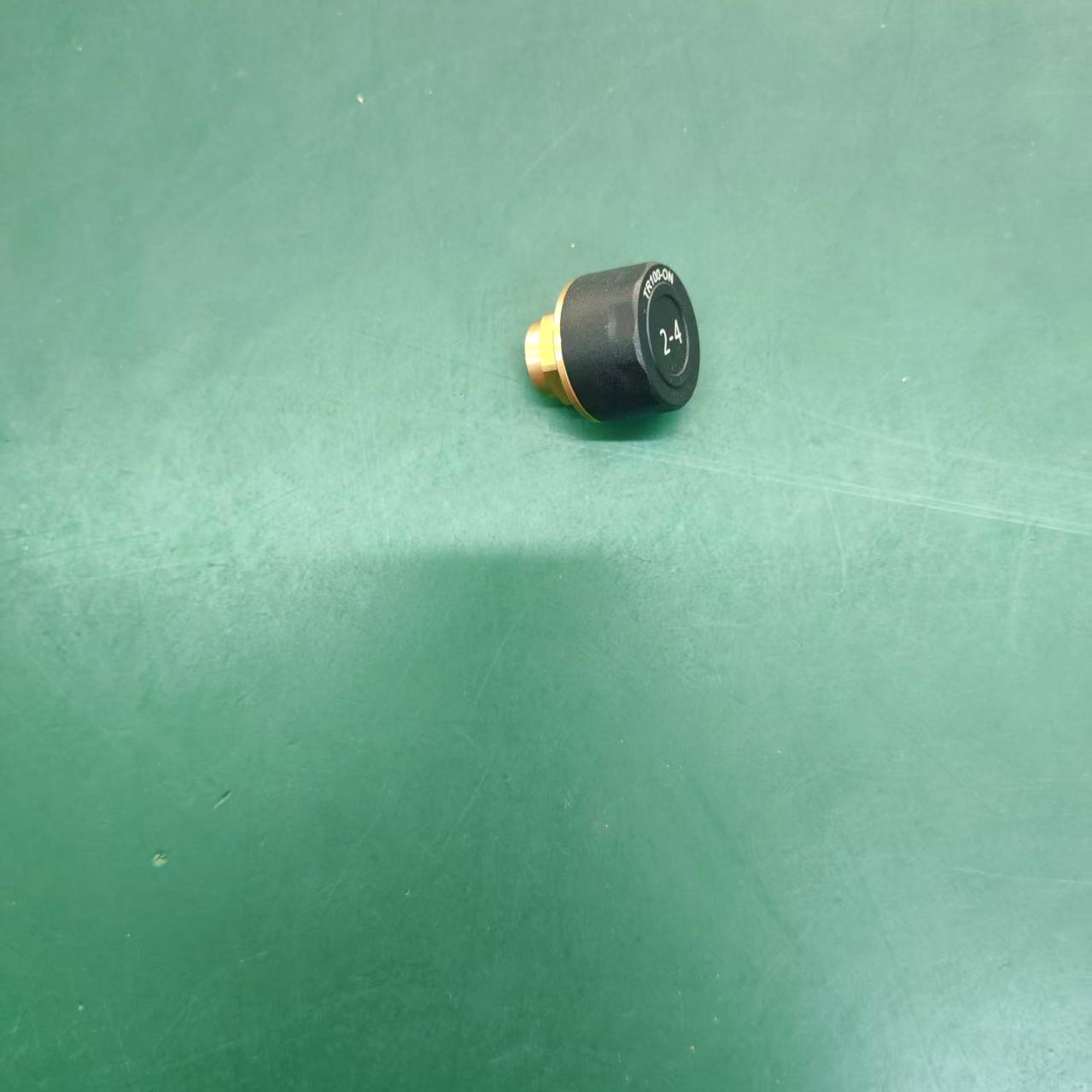
- Sensor form. External screw-on sensors in 8V1 or 12V1 tee versions, or internal band-mounted sensors where the wheel has to be protected from impact.
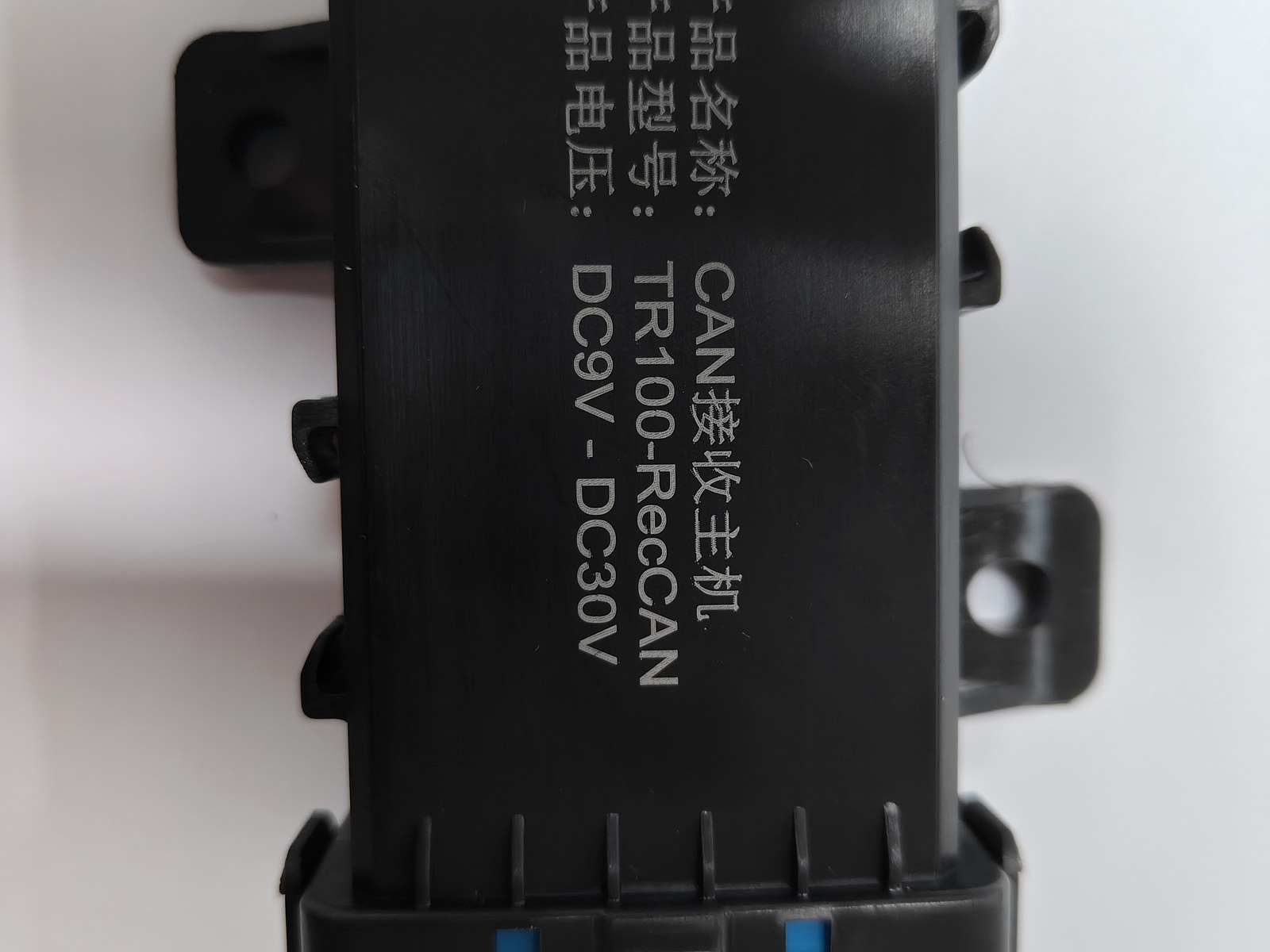
- Receiver. One receiver covers the machine with capacity to spare; it is the same receiver family we use on cranes, stackers and haul trucks.
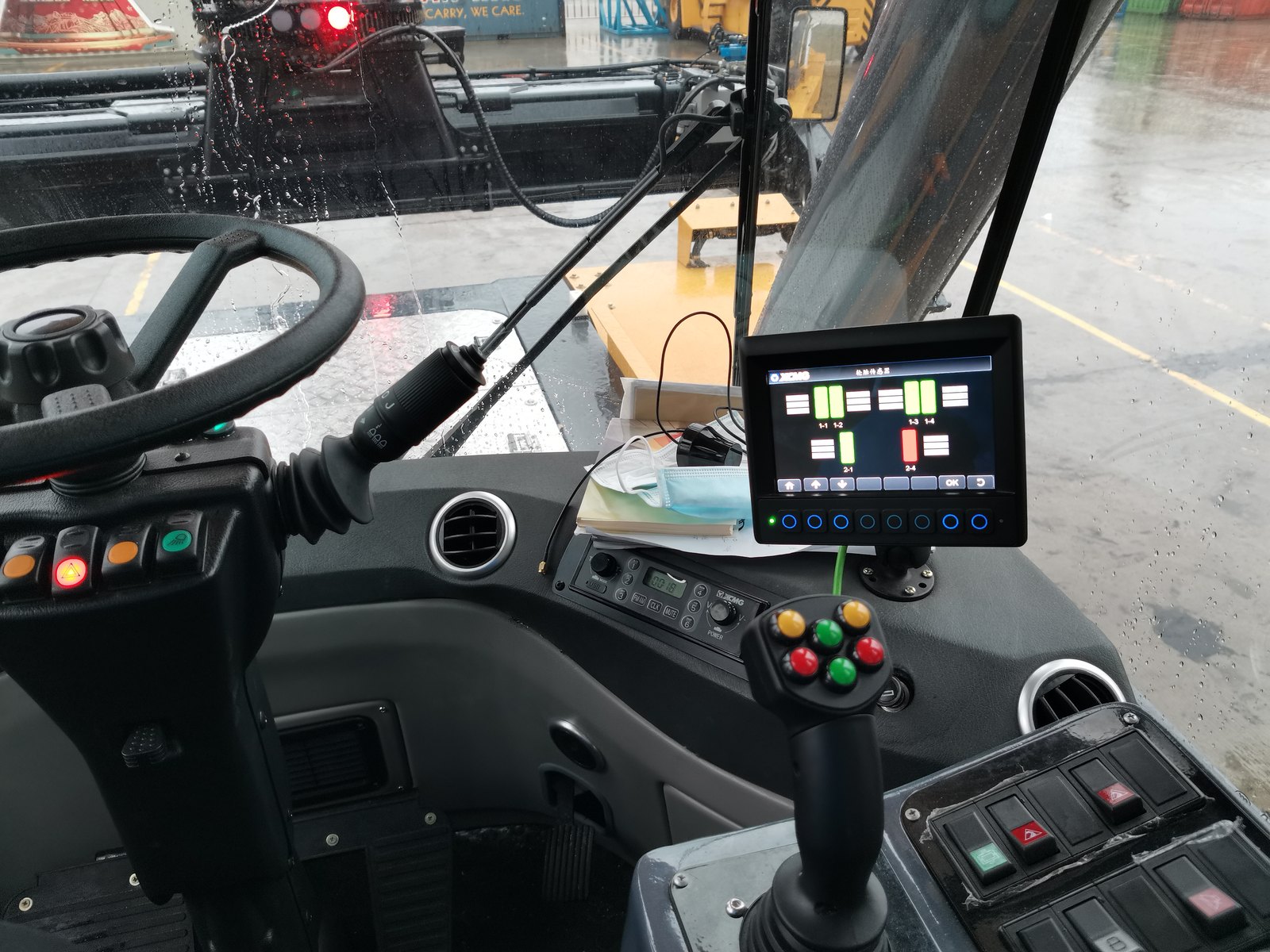
- Output. CAN to the machine controller, or RS485 / RS232 / Modbus RTU where the machine exposes a serial port. A 7-inch cab display is available where the operator should see the values directly.
- Repeater. Only when the geometry requires it — see the next section.
- Power. Taken from the machine, 10–30 V DC.
Where the radio question actually is
On this machine class the engineering question is not capacity and it is not sensor selection. It is whether the receiver can hear every wheel from where it can physically be mounted. A telescopic boom, a steel chassis and a load between the sensor and the antenna all sit in the same path.
That is a geometry problem, and we answer it from the axle layout rather than from a catalogue. Send the wheel positions and the machine length and we will say whether one receiver is enough or where a repeater belongs. A supplier who quotes a configuration without asking for the layout is quoting a box, not a system.
Parameters we publish
| Parameter | Value |
|---|---|
| Radio band | 433.92 MHz, licence-free |
| Wheel positions per receiver | up to 256 |
| Pressure accuracy | ±7 kPa |
| Temperature accuracy | 1 °C (error ≤ ±3 °C) |
| Temperature range | internal −40 to +125 °C · external −20 to +85 °C |
| Sensor seal | IP68 |
| Receiver interfaces | CAN / RS485 / PROFINET / RS232 / Modbus RTU |
| CAN bitrate and period | 250 kbps (software configurable) · 10 ms data period |
| Supply | 10–30 V DC |
Where this sits against the machines we have instrumented
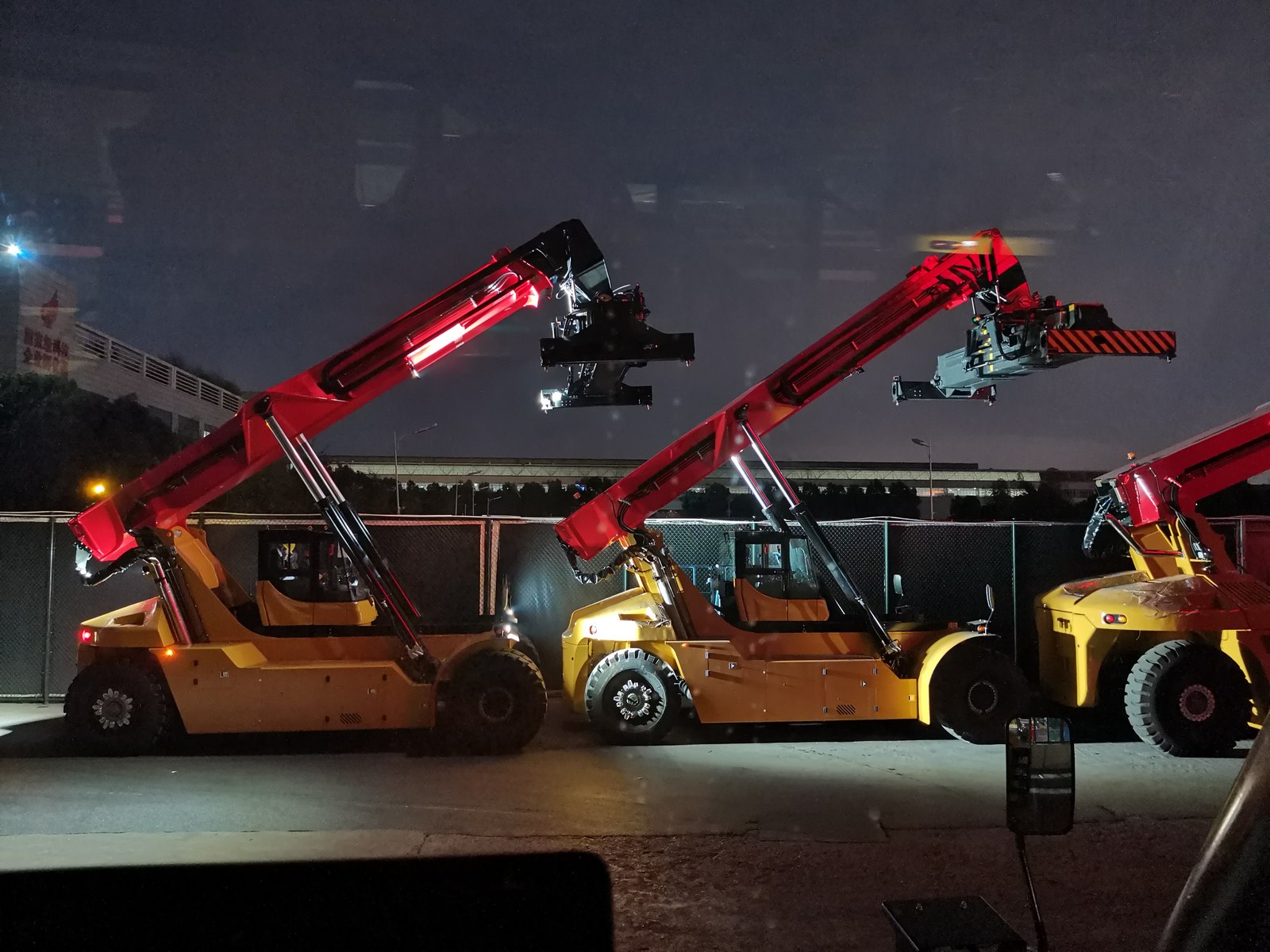
The handling family around a telehandler is a family of load cases, and the heavier members of that family are the ones we can point to with documented deployments. Reach stackers and container handlers lift loaded containers of up to 40 t; a telehandler is the lighter member of the same family — fewer wheel positions, lower load — with the same problem to solve: know the tyre condition before the machine goes to work.
If your evaluation needs to see a machine of this exact class before it will move, tell us. We would rather say what we can and cannot show than present an adjacent machine as this one.
Field photographs
Getting the data off the machine
On a telehandler the values are only useful where someone can act on them, so the output is part of the specification rather than an afterthought. The receiver is built with one interface of your choice — CAN, RS232, RS485 or Modbus RTU, chosen at the factory — and that decides the rest of the project: CAN into the machine controller, a serial link into a PLC or a yard system, or a cab display where nothing is integrated at all. If the machine controller is a Siemens-style PLC, the serial route is the usual one; the PLC integration page covers how that is wired, and Modbus RTU covers the register side. Sensor and receiver variants are on the receiver and sensor page, and the full range is on the product overview.
Questions worth asking any supplier
- Which sensor form fits this rim? External screw-on and internal band are not interchangeable decisions — one needs the tyre broken down.
- Where does the repeater go? Ask for the answer against your axle layout, in writing.
- What happens to the record when the machine is away from the yard? A display-only system loses the history; a receiver that logs keeps it.
What to send us
Machine model, number of wheel positions, axle layout, where the data has to end up (controller, cab display, or a platform), and whether the machine works away from a fixed yard. With those we can reply in writing about the configuration and the radio layout — that is the part worth getting right before anything is ordered.
Receiver and sensor range · All configurations · Beam carrier · Reach stacker · RTG crane
Configuration
| Configuration | 1 receiver + sensors per wheel count (repeater only if geometry requires) |
| Interfaces | CAN / RS485 / PROFINET / RS232 / Modbus RTU |
| Sensor | external screw-on (8V1 / 12V1) or internal band-mounted, IP68, 433.92 MHz |
| Display | 7" cab display or compact display, depending on the cab |
| Capacity | up to 256 wheel positions per receiver |
Built for
telescopic handlers from European and Chinese OEMs
| Customer / programme | Application |
|---|---|
| Nearest documented classes | reach stackers and container handlers lifting loaded containers up to 40 t |
Your machine is probably on this list
Send the model and wheel count. If we have instrumented something similar, we will tell you exactly how it was done.