Применение / Container Stacker / Handler
Container stacker TPMS — empty and loaded handlers
Container stacker TPMS uses the same architecture as a reach stacker: 433.92 MHz external sensors, one receiver for up to 256 wheel positions, and CAN output into the yard system. Empty and loaded handlers run different duty cycles, so alarm thresholds are configured per duty.
What a container stacker actually needs from a tyre system
A stacker works a yard all day: lift, travel a hundred metres, set down, repeat. Its tyres are the only thing between a loaded container and the ground, and a machine parked with a soft tyre takes a work line out of the yard — not just one unit out of the fleet.
It is also one of the easiest classes to retrofit, because the machine's own electrical architecture does not have to change.
The tyres, in numbers
- Four wheel positions on the usual mast-type stacker. Capacity is never the issue here — a single receiver covers up to 256 positions, so one unit serves the machine with room to spare.
- Empty and laden handlers are two different duties. An empty-container handler works high and fast with light loads; a laden handler is slower and heavier. Pressure behaviour differs between the two, which is why alarm thresholds are configured per duty rather than copied from one machine type to another.
- Big OTR tyres, hard surfaces, constant steering. Yard work is concrete and asphalt at low speed with a lot of direction changes — the tyre is worked in a way a road tyre never is.
- Retrofit is the normal case. Most of these machines are already in service when the system goes on, so the sensor form has to suit the rim and the installer has to be able to work without stripping the machine down.
How we configure a stacker
- Sensor form: external screw-on sensors in 8V1 / 12V1 tee versions, or internal sensors where the wheel has to be protected. IP68 either way.
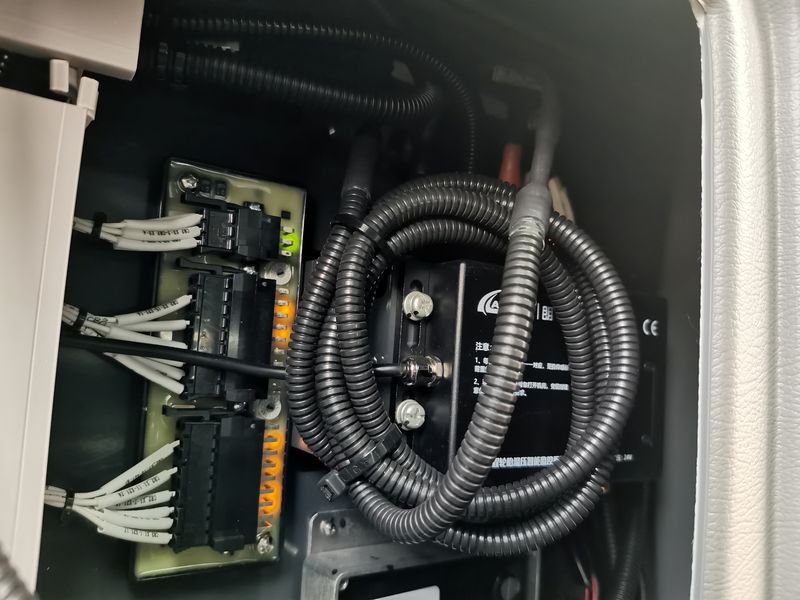
- Receiver: one unit for the machine, mounted where it can hear all four positions.
- Data path, two options: CAN into the yard or machine controller where the yard system will take the data, or a display-only installation for pure retrofit projects where nothing is integrated at all.
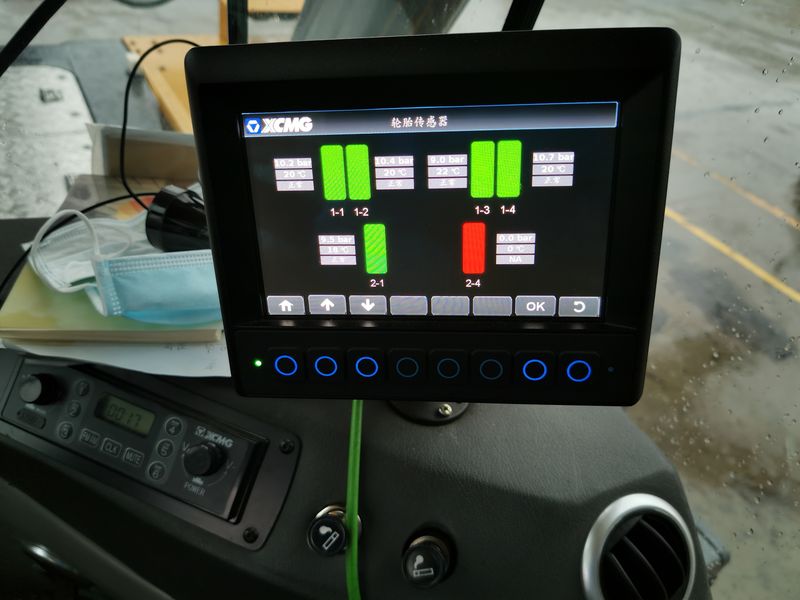
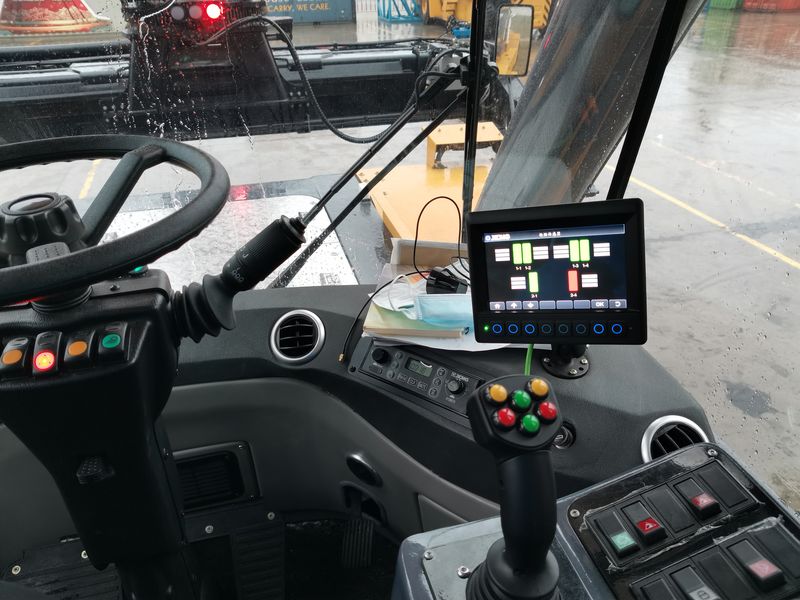
- Display: a 7-inch cab display if the operator should see the values directly; several yards prefer the display alone because it needs no integration work from their IT side.
- Power: taken from the machine, 10–30 V DC.
Why no repeater is needed here
A stacker is short. The chassis that makes a beam carrier difficult — the one that needs twelve repeaters — does not exist on this class, so the usual configuration is a receiver, a display and four sensors. Where a yard wants a repeater it is usually for a different reason: covering a transfer point or a charging area where machines sit outside the main handling line.
Parameters we publish
| Parameter | Value |
|---|---|
| Radio band | 433.92 MHz, licence-free |
| Wheel positions per receiver | up to 256 |
| Pressure accuracy | ±7 kPa |
| Temperature accuracy | 1 °C (error ≤ ±3 °C) |
| Temperature range | internal −40 to +125 °C · external −20 to +85 °C |
| Sensor seal | IP68 |
| Receiver interfaces | CAN / RS485 / PROFINET / RS232 / Modbus RTU |
| CAN bitrate and period | 250 kbps (software configurable) · 10 ms data period |
| Supply | 10–30 V DC |
What a retrofit programme looks like
Yard work is a shift operation, so the fitting has to fit the shift pattern. In practice a fleet retrofit is done one or two machines at a time, between shifts, and the yard keeps working throughout: each machine goes in with its receiver, display and four sensors, is checked against a known pressure, and goes back on the line.
What the yard gets at the end is not a report but a habit: the operator sees a wheel going soft before it becomes a stopped machine, and the maintenance team sees the same number the operator sees. That shared view is the point of putting a display in the cab rather than only a dashboard.
Deployed programmes
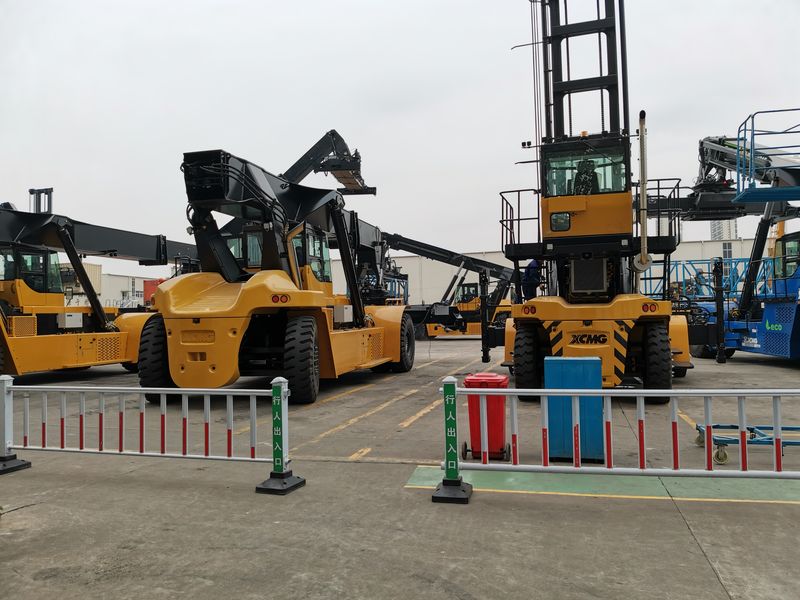
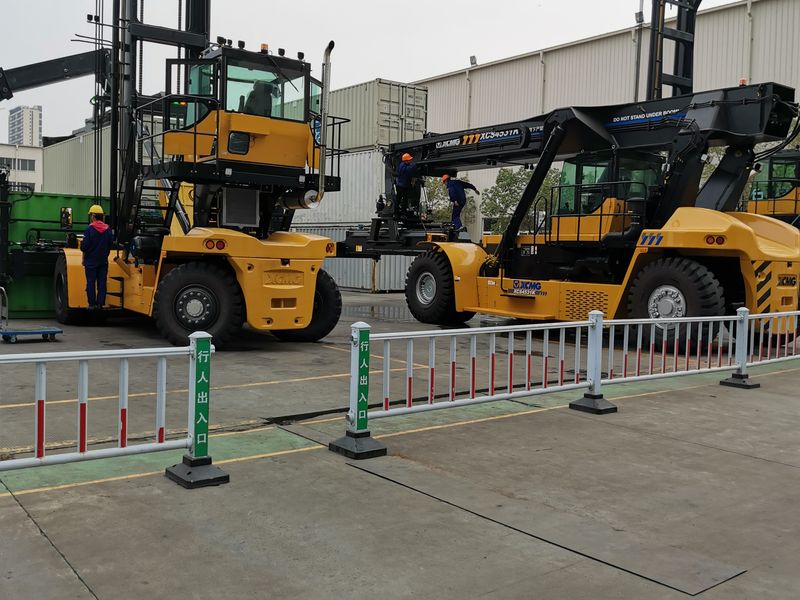
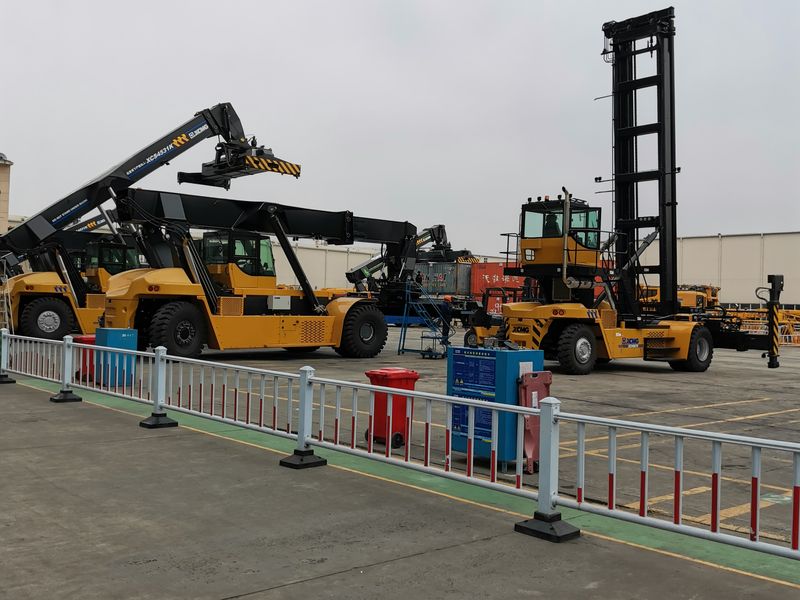
Batch fitment across stacker fleets in port container yards, delivered in fleet quantities. We do not name the yards. If you need a reference for a specific stacker model or a specific fleet size, say which and we will tell you what we can show and what we cannot.
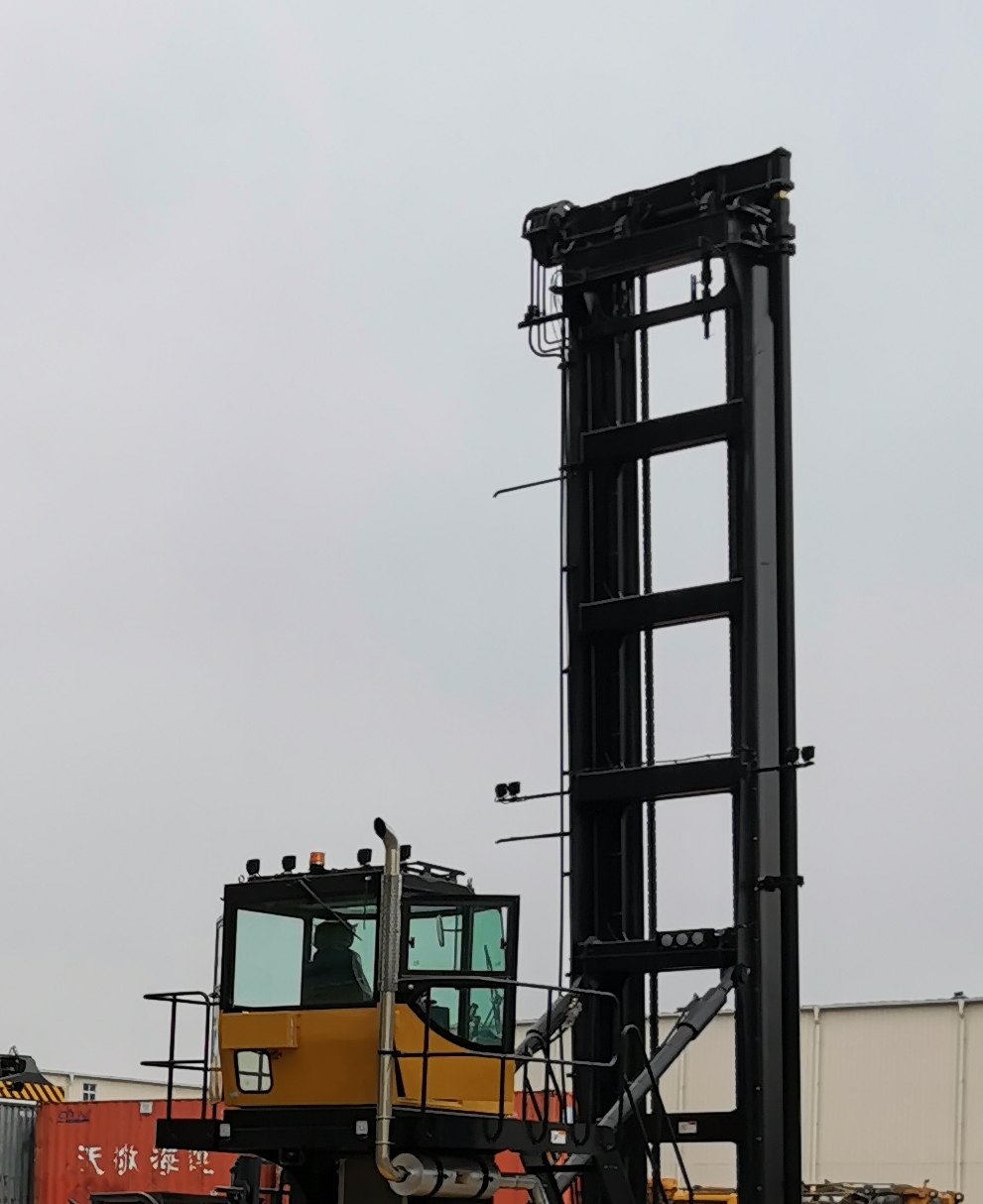
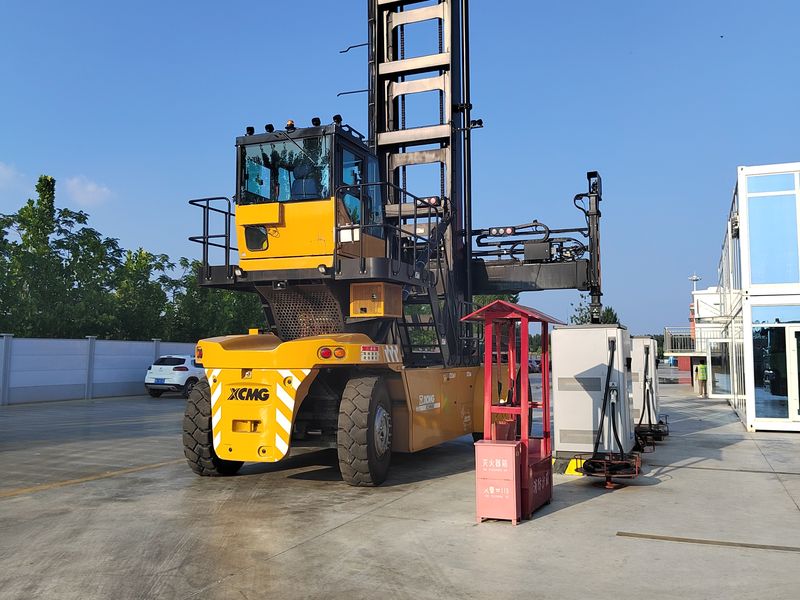
Field photograph
Questions we are asked on this class
Do we have to change the machine's electrical architecture?
No. Power is taken from the machine and data either goes onto CAN or stays on a cab display. The machine's own wiring is not re-engineered, which is what makes retrofit practical on a working fleet.
Should empty and laden handlers share alarm thresholds?
No — they run different duties, so thresholds are set per duty. Using one set for both is the most common way a retrofit produces nuisance alarms in the first week.
Is one receiver enough for a four-wheel machine?
For the machine, yes. Across a fleet, each machine keeps its own receiver so that one machine going down does not take the yard's visibility with it.
Send us the wheel count
Tell us the machine type (empty or laden handler), the wheel count and how the data has to be used — controller, yard system, or cab display only — and we will reply with the configuration and the fitting approach. Receiver and sensor range · All configurations · Reach stackers · RTG cranes
Configuration
| Configuration | 1 receiver + 1 repeater + sensors per wheel count |
| Data path | CAN to the controller, or display-only for retrofit |
| Sensor | external or internal, IP68, −40 ~ +125 °C |
| Fit | retrofit-friendly: no change to the machine's own electrical architecture |
Delivered on
Empty- and laden-container stackers, all models
| Customer / programme | Application | Scale |
|---|---|---|
| Port container yards | batch fitment across stacker fleets | delivered in fleet quantities |
Фото с объектов
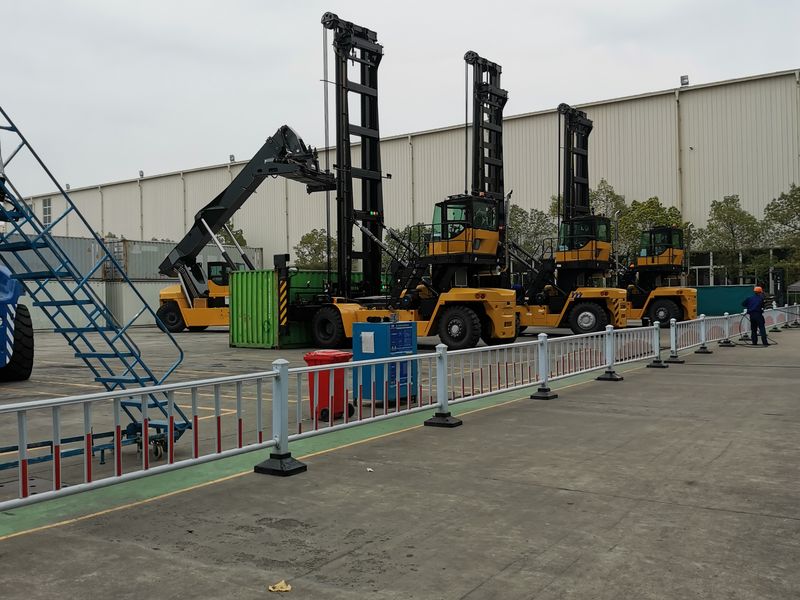
Фотографии монтажа и работы на этом классе машин.
Your machine is probably on this list
Send the model and wheel count. If we have instrumented something similar, we will tell you exactly how it was done.