Anwendungen / Beam Carrier & Bridge Girder Transporter
Beam carrier TPMS — girder transporter tyre monitoring
Beam carrier TPMS on girder transporters with dozens of axles: one receiver covers up to 256 wheel positions at 433.92 MHz, with repeaters planned along the chassis. Uneven pressure across an axle group is a load question before it is a tyre cost question.
Why this machine class is the hard one
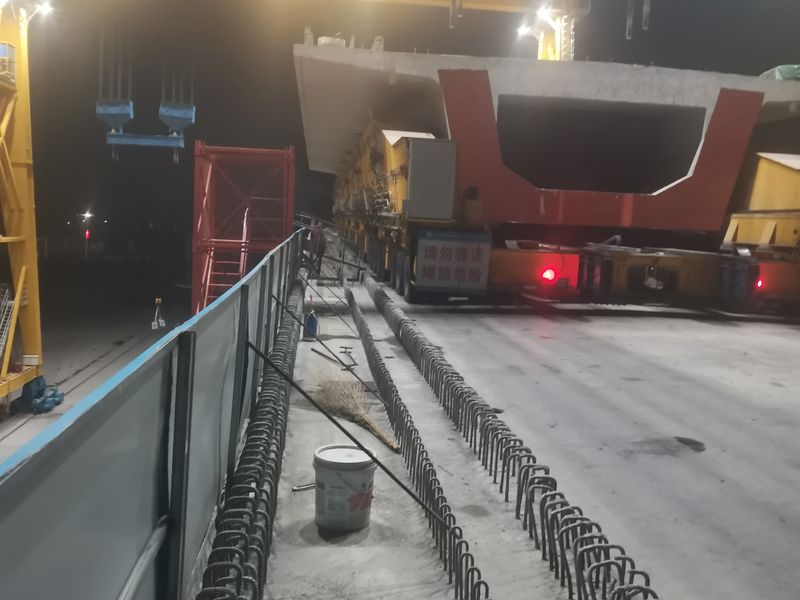
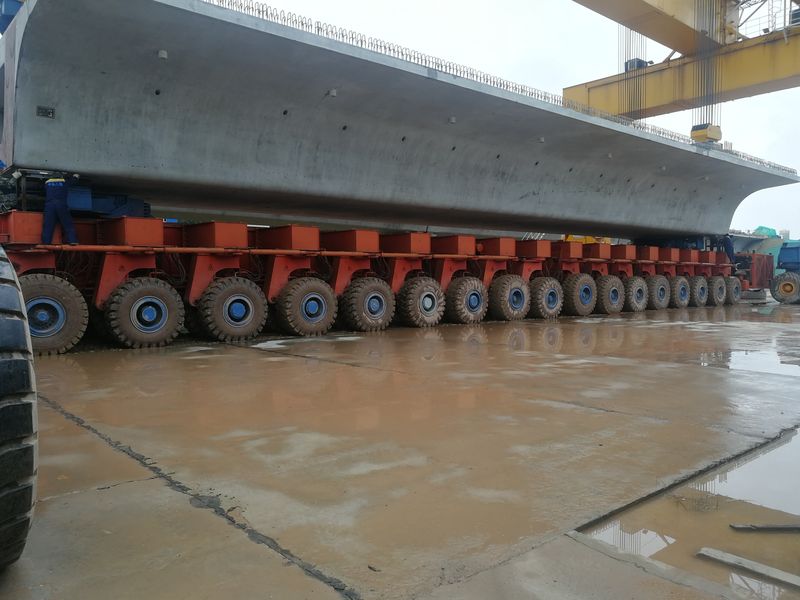
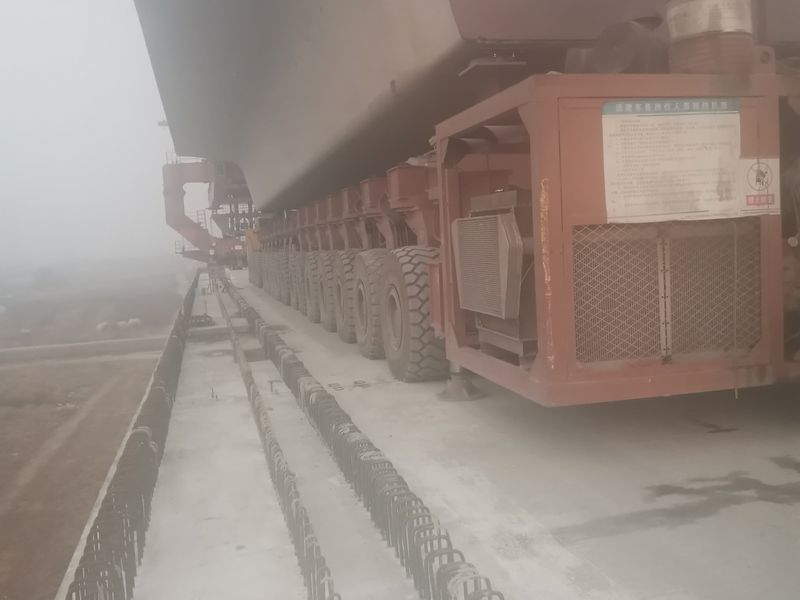
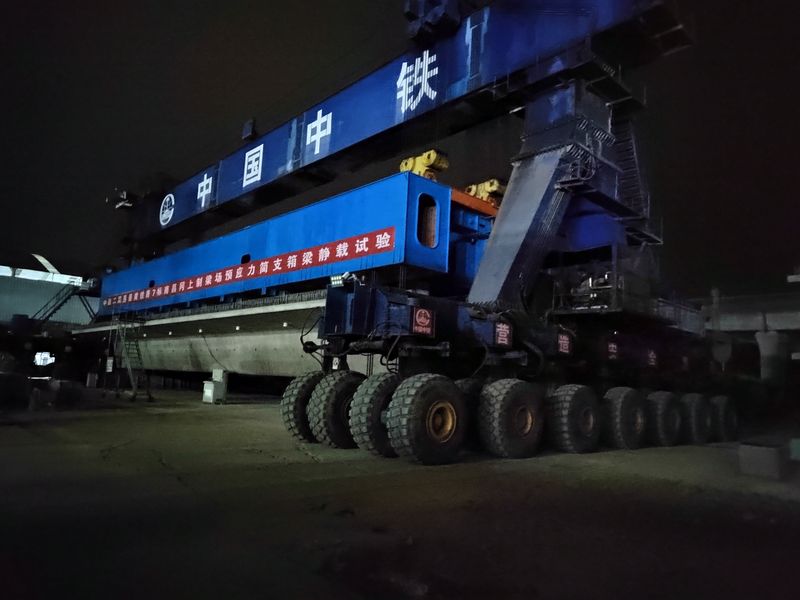
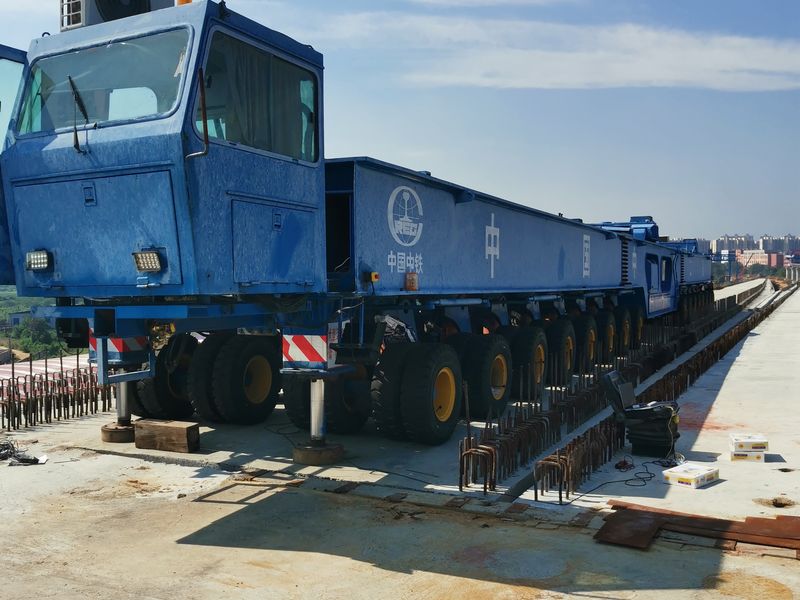
A beam carrier carries a bridge girder that can weigh the better part of a thousand tonnes, and it carries it on dozens of axles. One tyre running soft on a machine like this is not a tyre bill — it is a schedule event, because the girder cannot be set down just anywhere.
It is also the machine class where the radio planning is genuinely difficult: a chassis long enough to need repeaters, and wheel positions numbered in the hundreds.
The tyres, in numbers
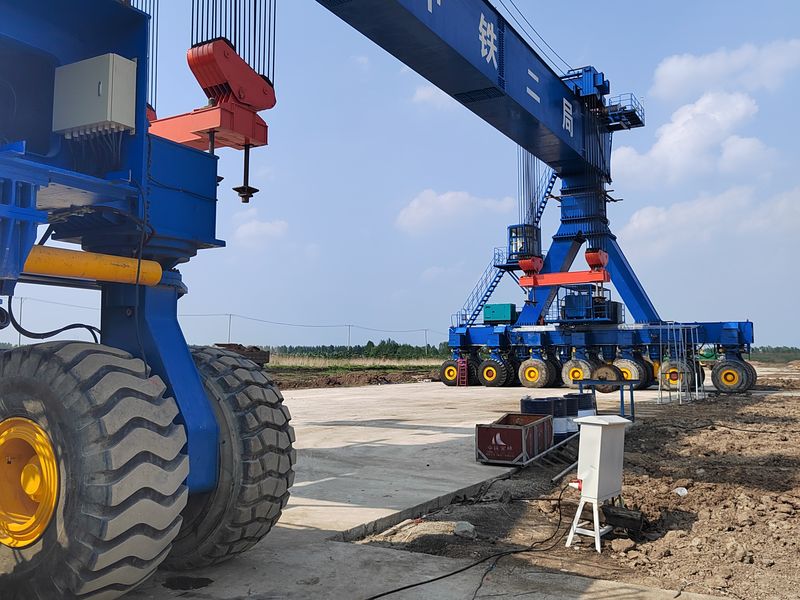
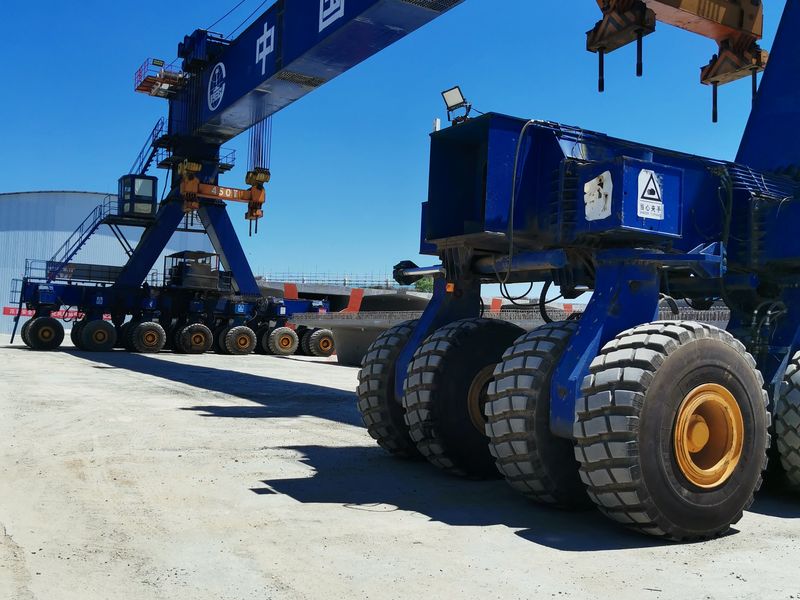
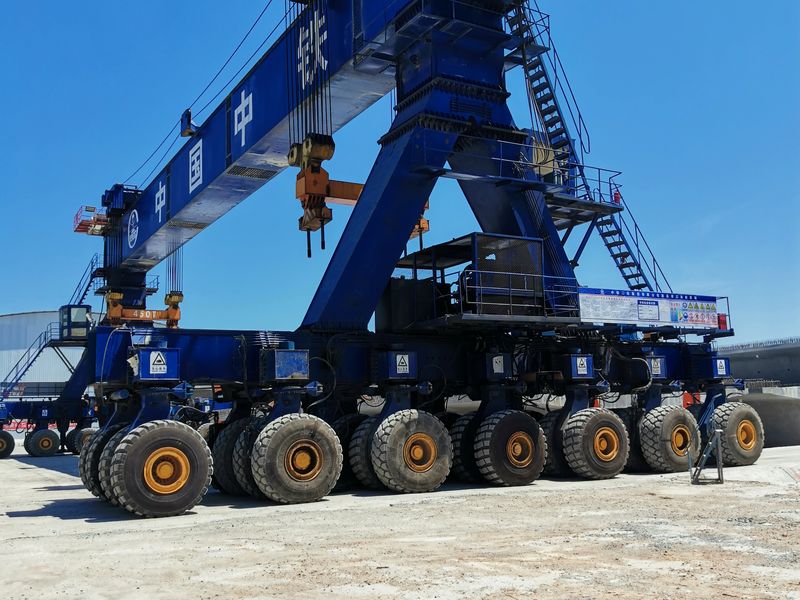
- Wheel positions. The machines we have instrumented run to 160 wheels on a 20-axle carrier; the largest single vehicle we have instrumented carried 224 wheels (28 axles × 8). One receiver covers up to 256 positions, so capacity is not the limit — addressing and radio path are.
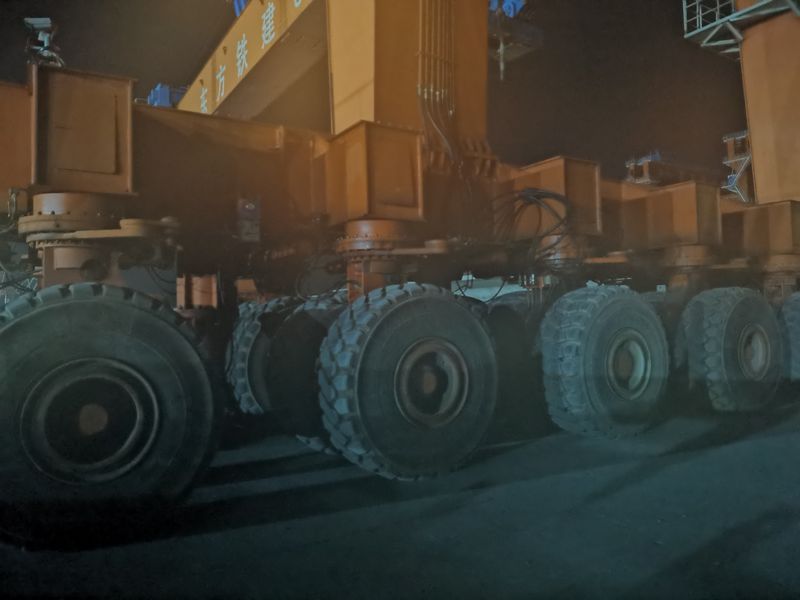
- Axle count, not wheel count, drives the layout. A 20-axle machine means twenty places where a tyre can be wrong, and a walk-around that takes real time.
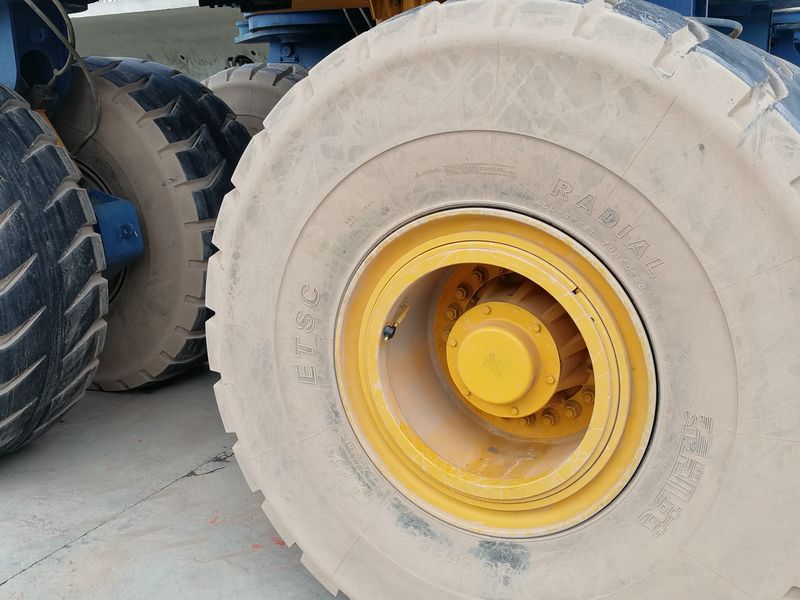
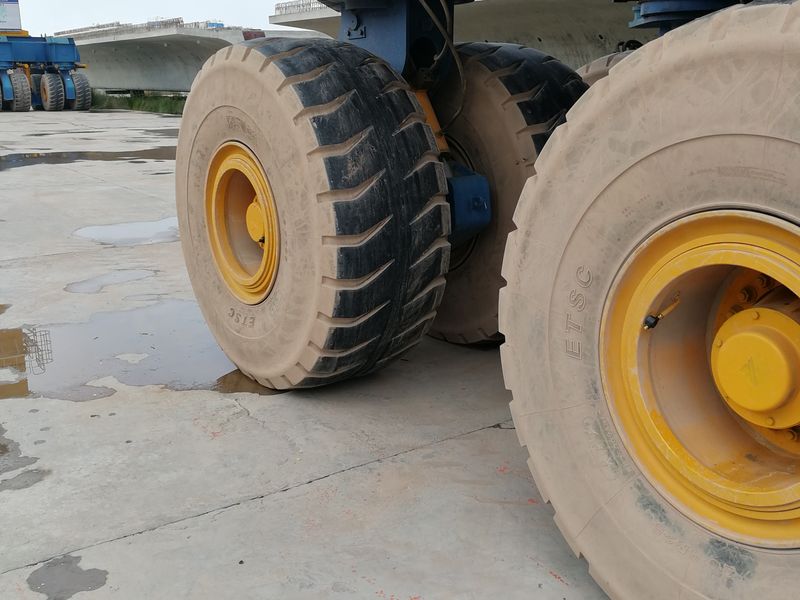
- Tyres are large and the pressures are high. The pressure you run is set by the machine and tyre manufacturer; our job is to report it accurately and in time, not to set it.
- The duty is slow, heavy and continuous. A girder move is a planned operation with a narrow window — so the value of early warning is measured against that window, not against a daily average.
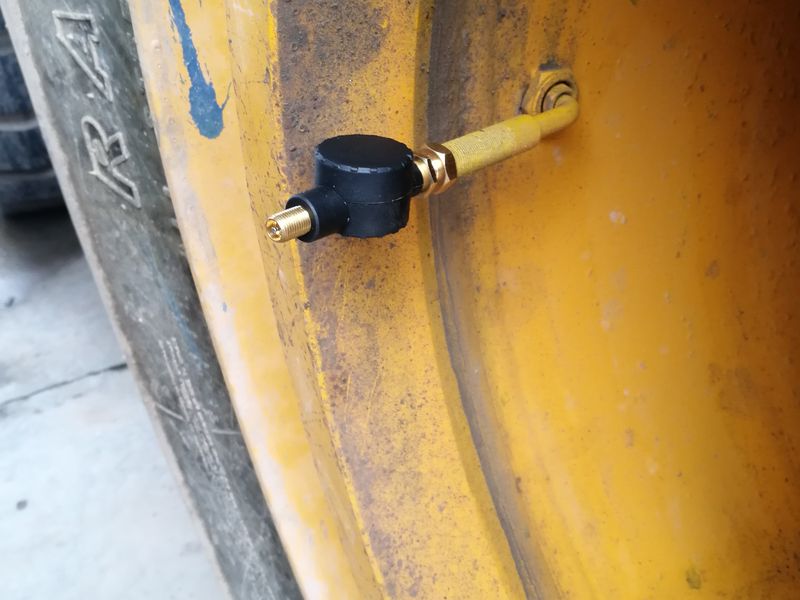
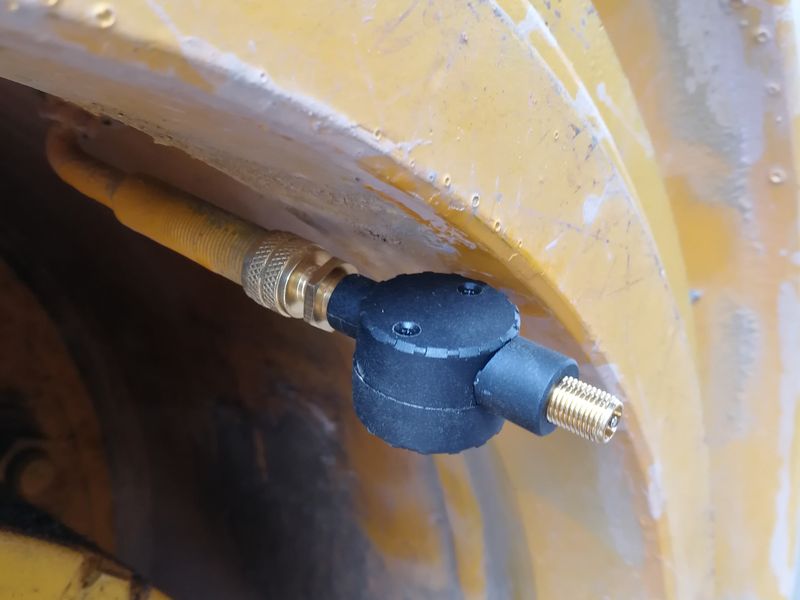
- Sensors here are internal. Strap-mounted or built-in valve sensors on this class, because external units on a construction site do not survive long.
How we configure a beam carrier
The reference configuration for a 160-wheel, 20-axle carrier is not one receiver and a hope. It is:
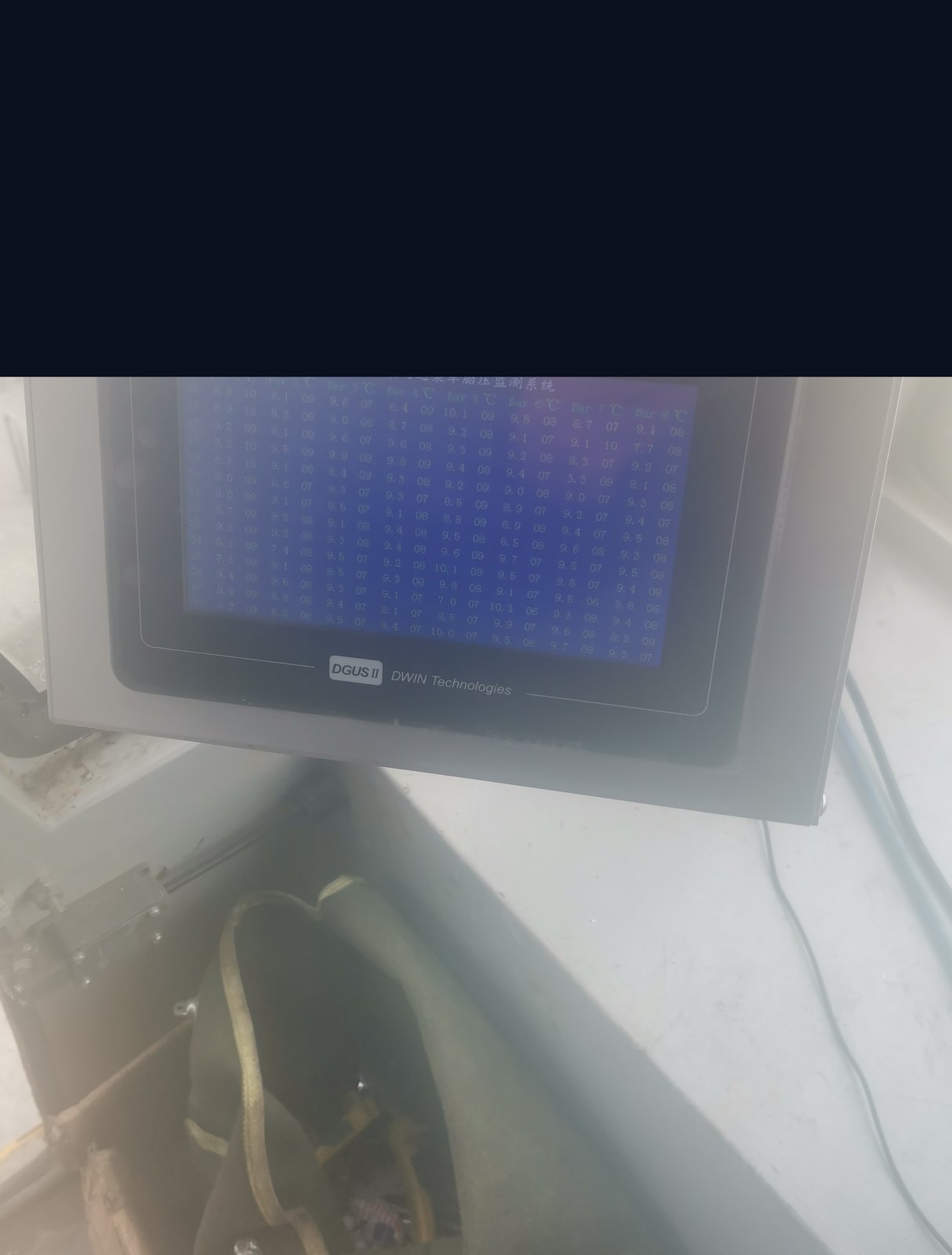
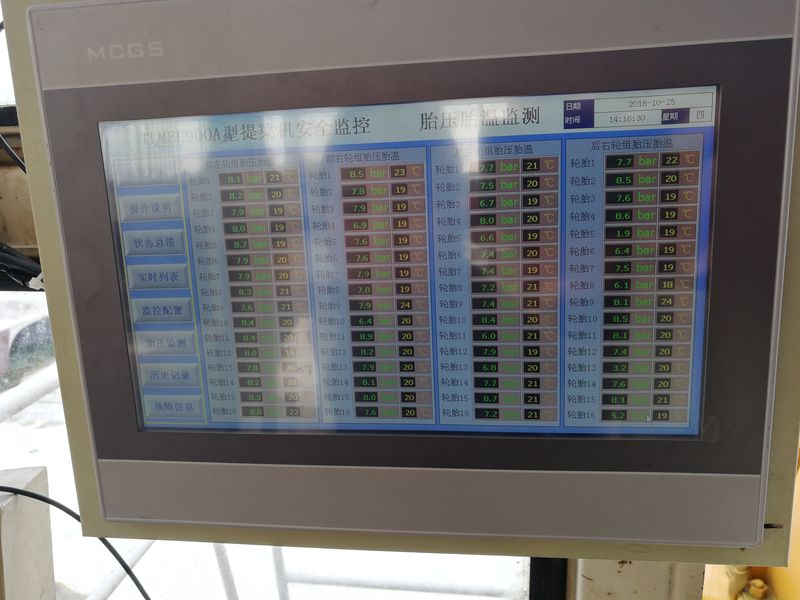
- 2 receivers, each with a 7-inch cab display — split so that neither receiver carries the whole wheel count alone.
- 12 repeaters along the chassis — because a steel chassis of this length attenuates 433.92 MHz well enough that the far end is otherwise inaudible.
- 160 sensors, internal strap or built-in valve, IP68.
- Data path: CAN to the machine controller, or the cab display, or 4G to a cloud overview where the site wants a fleet view.
- Alarm logic wired to an interlock where the site asks for it — a low-pressure or fast-leak condition can limit travel speed rather than only lighting a lamp.
Where the repeaters go — the part worth getting right
Repeater placement on this class is planned against the chassis layout, not estimated on site. The question we ask is not "how many repeaters" but "which tyre positions cannot hear the receiver from where it can physically be mounted". Answering that needs three things from you: the axle layout, the chassis length, and where the receiver is allowed to sit.
That is why the CTA at the bottom of this page asks for the axle count rather than for a quotation. On a 20-axle machine a layout that is guessed costs a return visit; a layout that is planned costs an email.
Parameters we publish
| Parameter | Value |
|---|---|
| Radio band | 433.92 MHz, licence-free |
| Wheel positions per receiver | up to 256 |
| Pressure accuracy | ±7 kPa |
| Temperature accuracy / range | 1 °C (error ≤ ±3 °C) · internal −40 to +125 °C |
| Sensor type on this class | internal strap or built-in valve, IP68 |
| Receiver interfaces | CAN / RS485 / PROFINET / RS232 / Modbus RTU |
| CAN bitrate and period | 250 kbps (software configurable) · 10 ms data period |
| Supply | 10–30 V DC |
Deployed programmes
Two numbers we can document, without naming the customers:
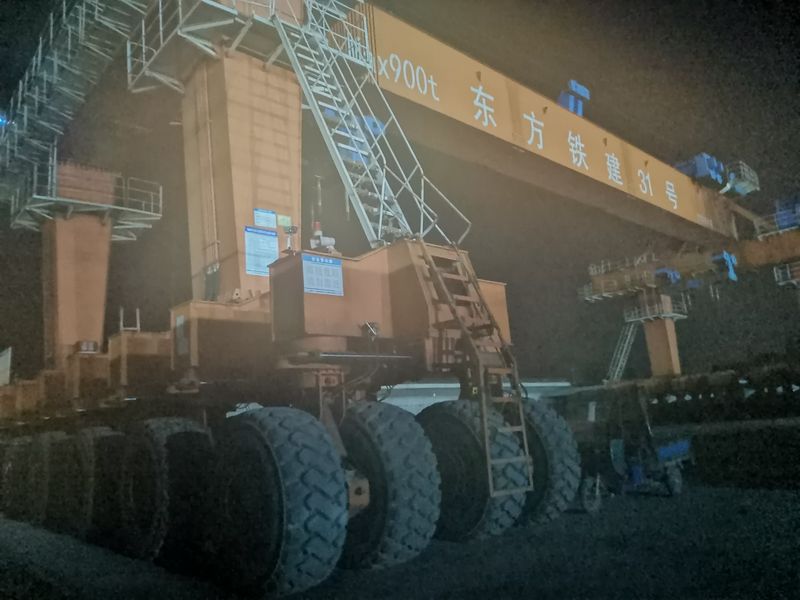
- 160-wheel programme: DCY900Y beam carriers, 160 wheels per machine, 10 machines instrumented.
- 224-wheel legacy programme: 28 axles × 8 wheels on a single vehicle — the largest single vehicle we have instrumented.
If you need a reference for a specific machine size, say which and we will tell you what we can and cannot show.
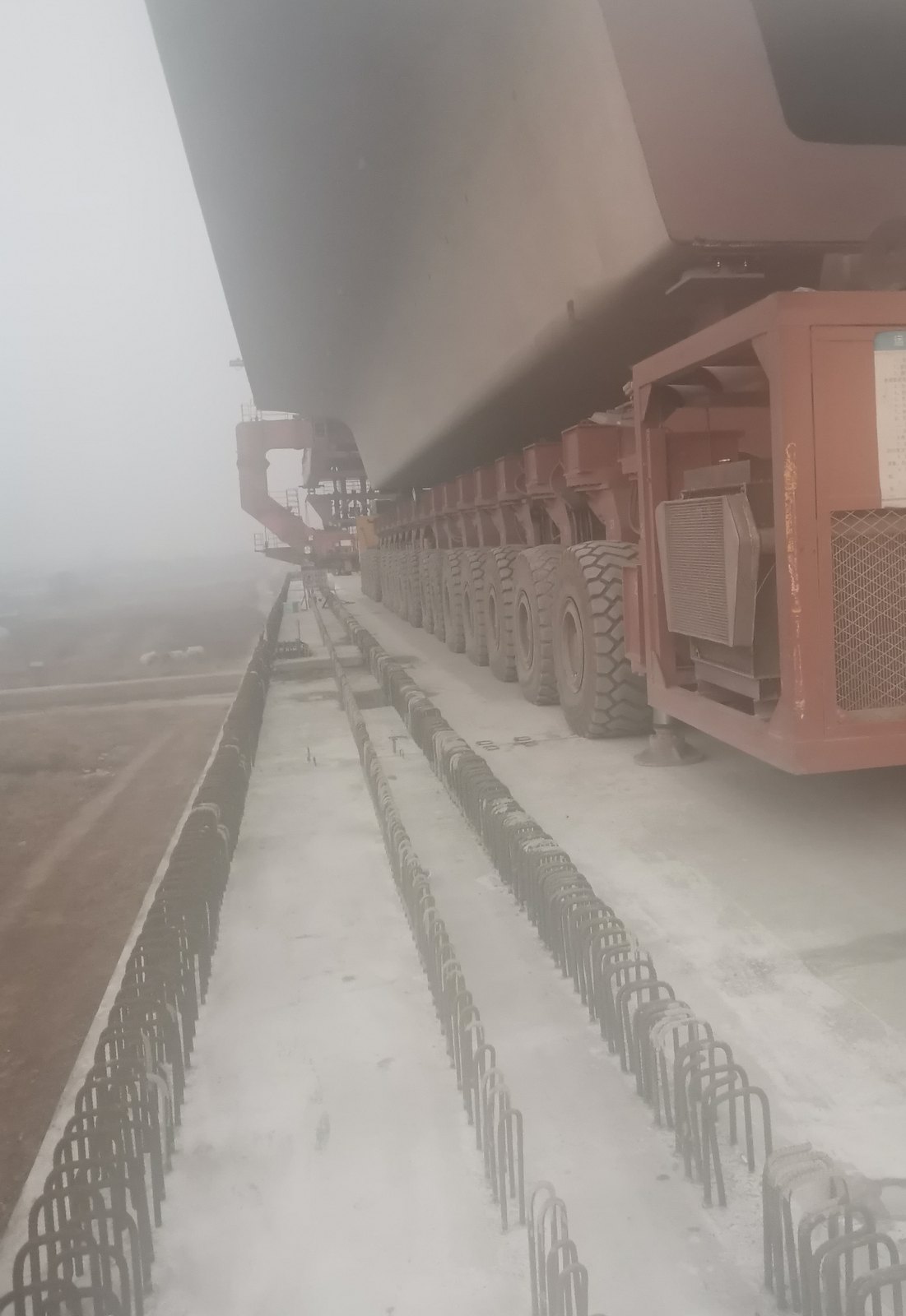
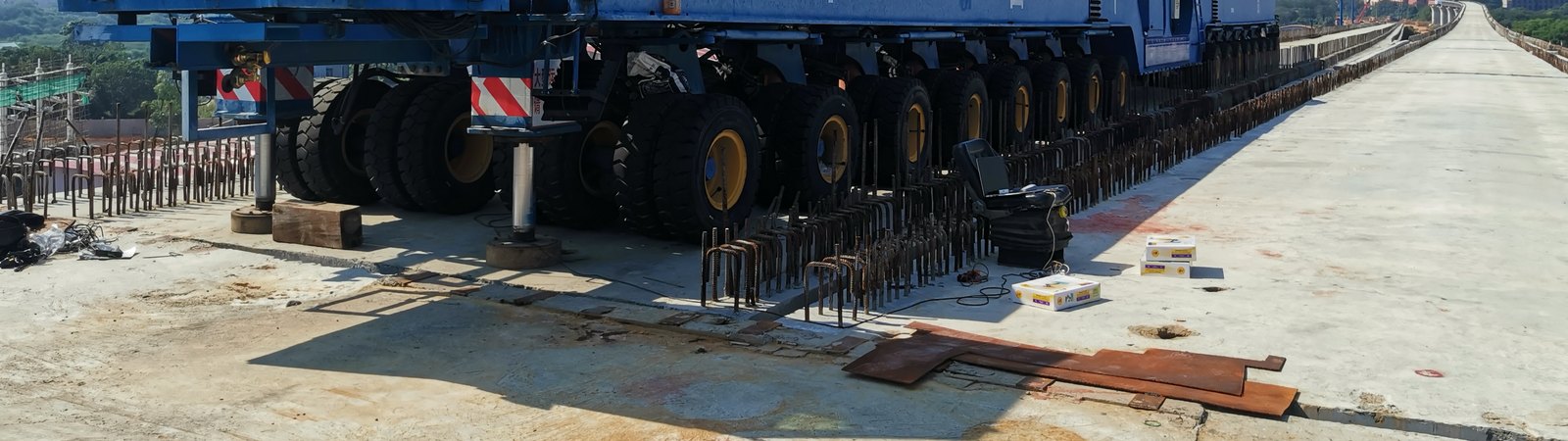
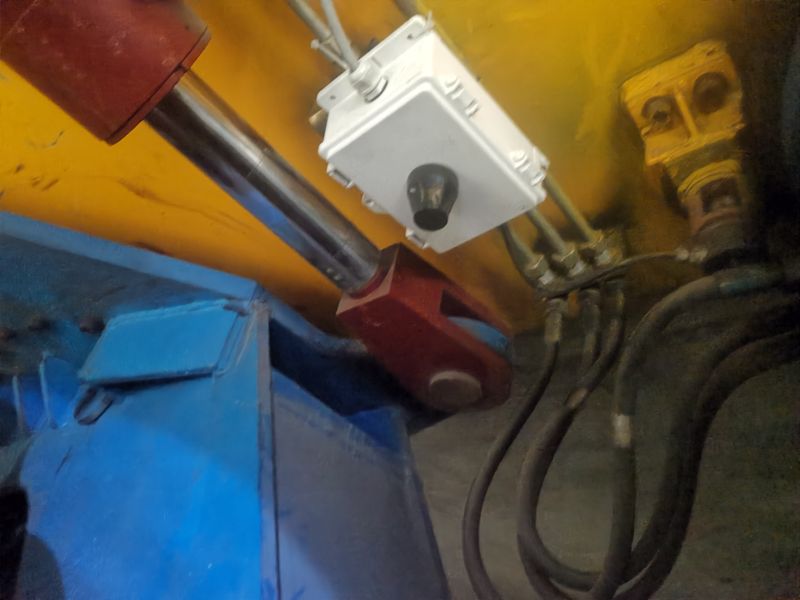
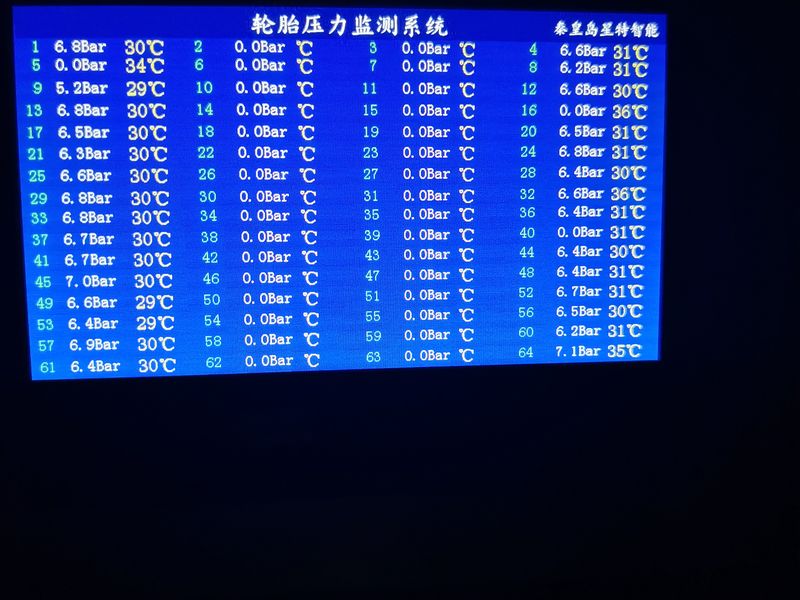
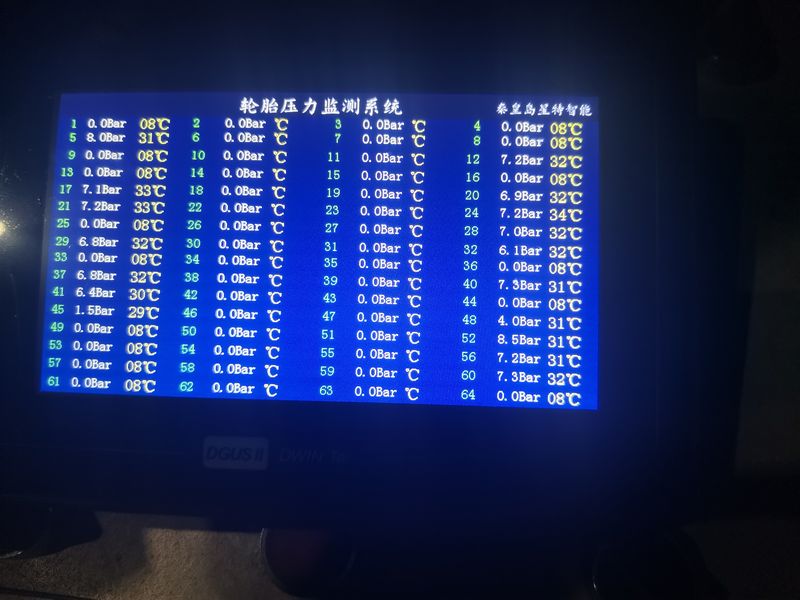
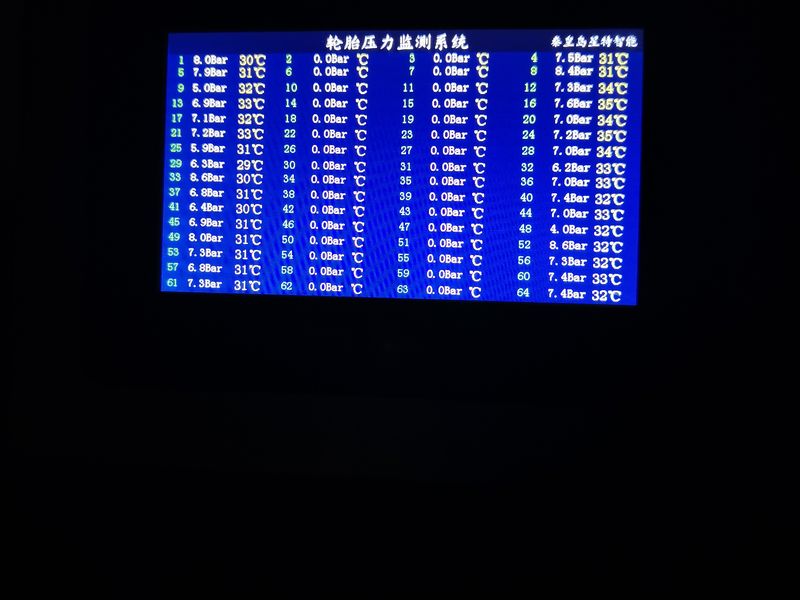
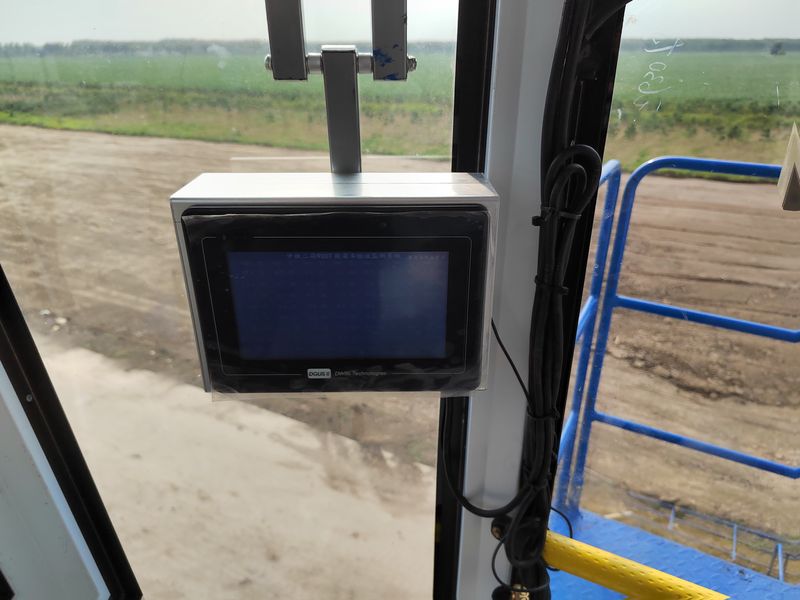
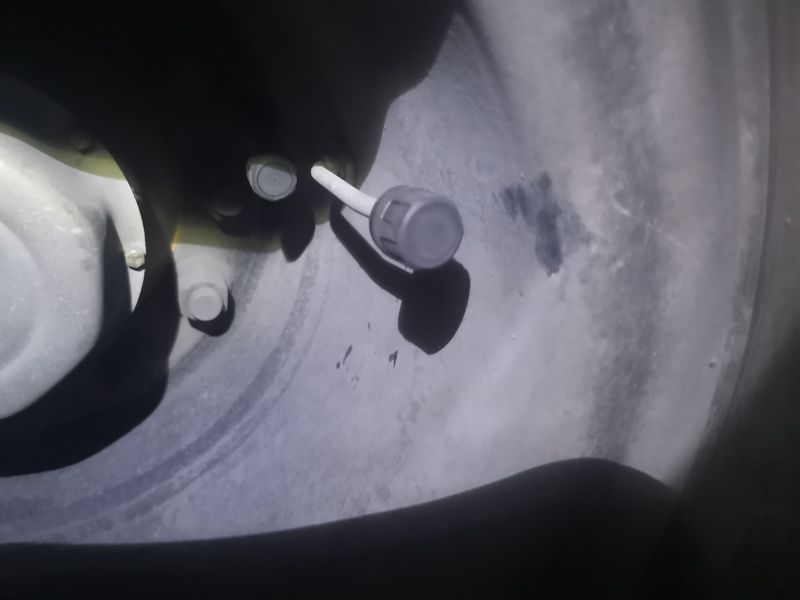
Field photographs
Questions we are asked on this class
Can one receiver really cover 160 wheels?
Capacity, yes — up to 256 positions. Radio, not always: the chassis length decides how many repeaters are needed. That is why we plan from the layout.
Do external sensors work here?
We supply them on other classes; on construction sites they are exposed, so internal strap or built-in valve sensors are the normal choice here.
What happens when a sensor misses a reading?
The layout defines an absence value rather than silently writing a zero, and the receiver keeps the last known reading with its timestamp so the operator can see it is stale.
Send us the axle count
Tell us the axle count, the chassis length and where the receiver may sit, and we will send back a repeater layout — not a quotation. The layout is the part that decides whether the system works on a machine of this length. Receiver and sensor range · All configurations · Mobile cranes · RTG cranes
Configuration
| Wheel positions | up to 256 (we have delivered 160-wheel machines; largest instrumented: 224 wheels) |
| Configuration | 2 receivers (with two 7" displays) + 12 repeaters + 160 sensors on a 20-axle carrier |
| Why repeaters | long chassis blocks 433 MHz — repeater placement is planned against the chassis layout, not estimated |
| Sensor | internal strap or built-in valve, −40 ~ +125 °C, IP68, battery ≥ 5–6 years |
| Data path | CAN to the machine controller, or 7" cab display, or 4G cloud for fleet overview |
| Alarm logic | low pressure / fast leak / high temperature — can be wired into an interlock to limit speed |
Delivered on
DCY900Y (160 wheels) · 224-wheel legacy (28 axles × 8) · various beam launchers
| Customer / programme | Application | Scale |
|---|---|---|
| 160-wheel beam carrier programme | DCY900Y beam carrier, 160 wheels per machine | 10 machines delivered |
| 224-wheel legacy programme | 28 axles × 8 wheels on a single vehicle | largest single vehicle we have instrumented |
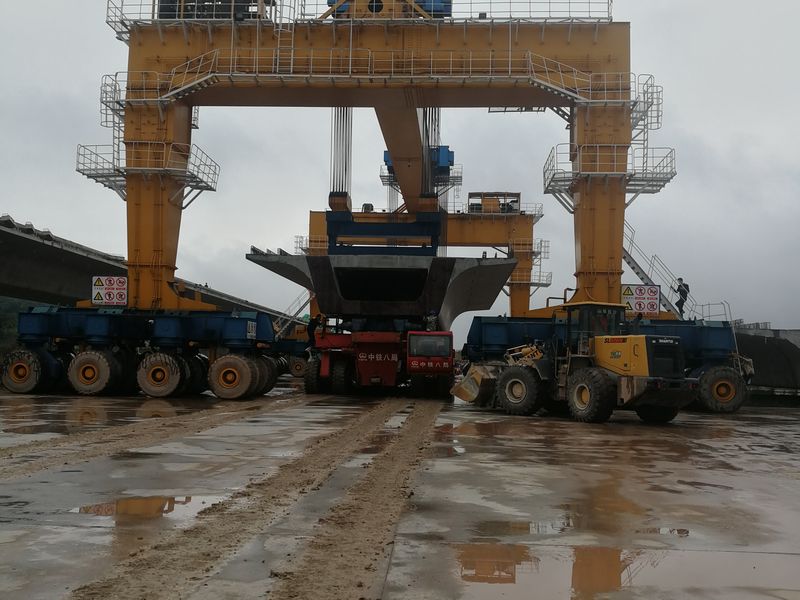
Einsatzfotos
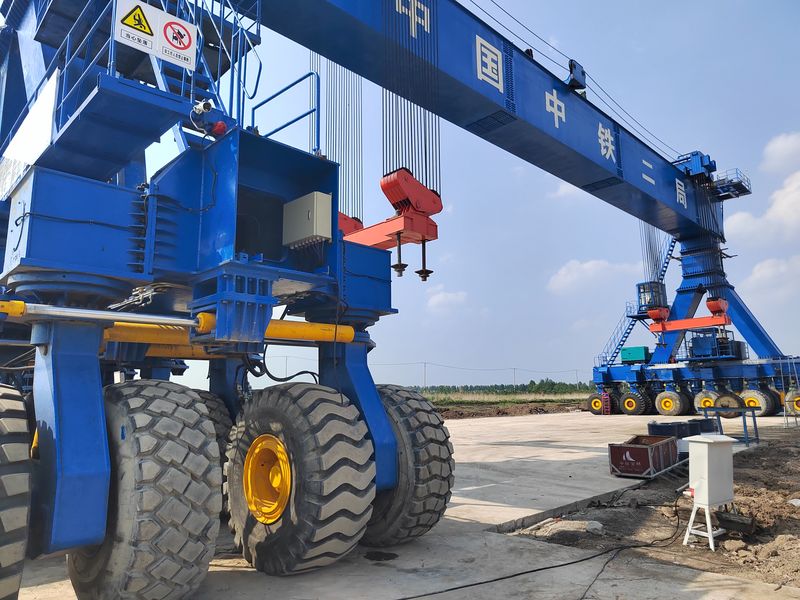
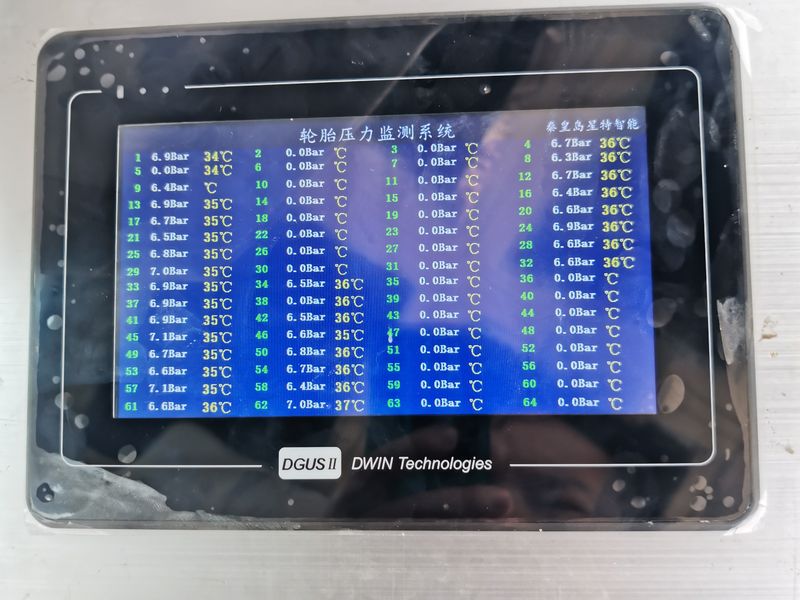
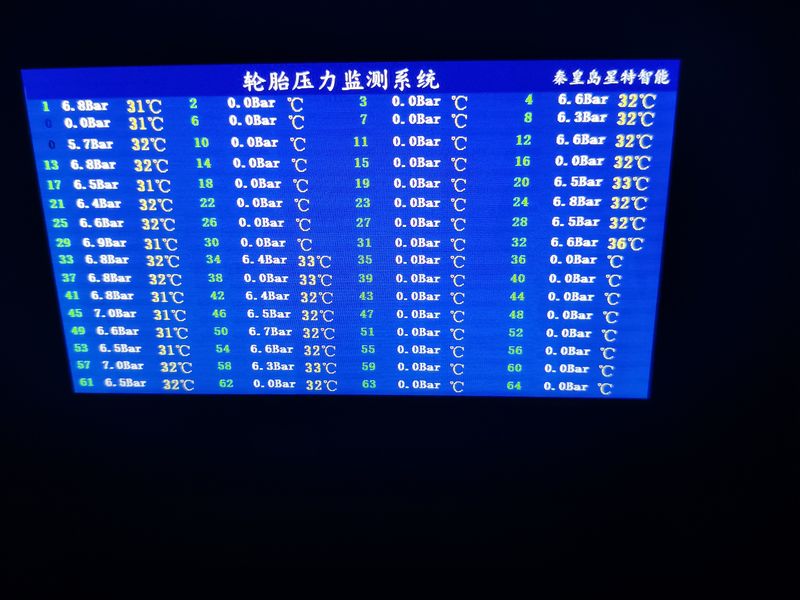
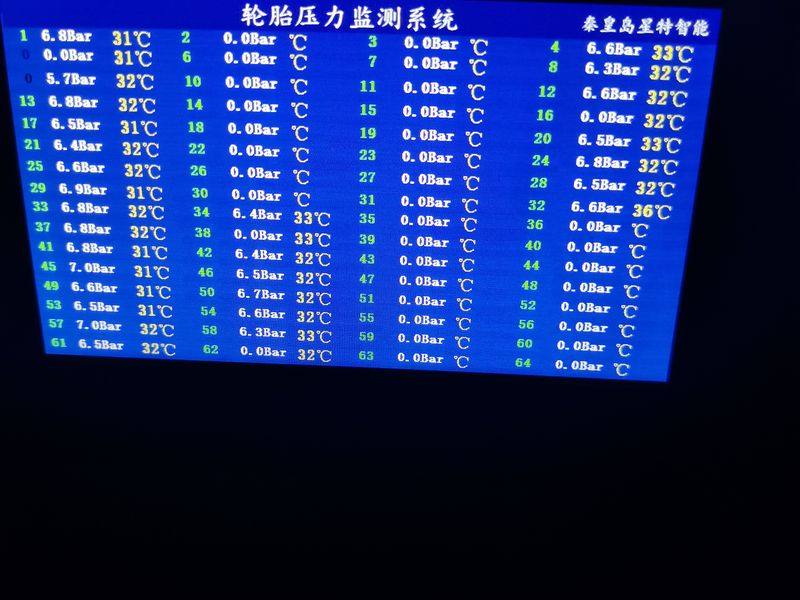
Fotos aus Installation und Einsatz dieser Maschinenklasse.
Your machine is probably on this list
Send the model and wheel count. If we have instrumented something similar, we will tell you exactly how it was done.