The economics are the argument
On a container handler the tyre is the expensive consumable, and the pressure is what decides how
long it lasts. A tyre run a bar low runs hotter, wears faster and fails earlier — and the machine
stops in a stack, which is the worst possible place to change a wheel.
That is the commercial case, before any safety argument: **the pressure is the tyre's lifespan, and
the tyre is the biggest line in the maintenance budget.**
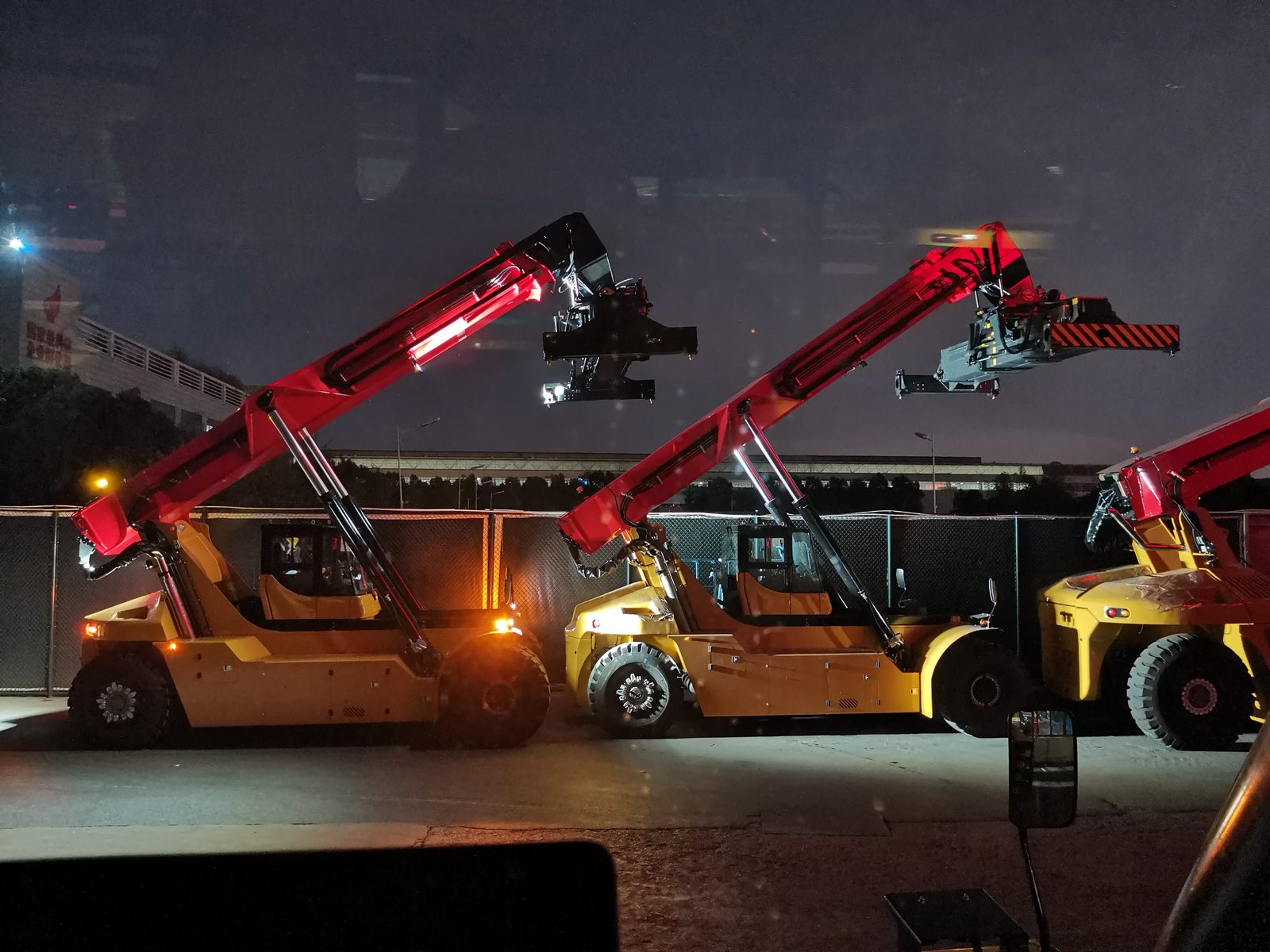
Why the geometry is hard
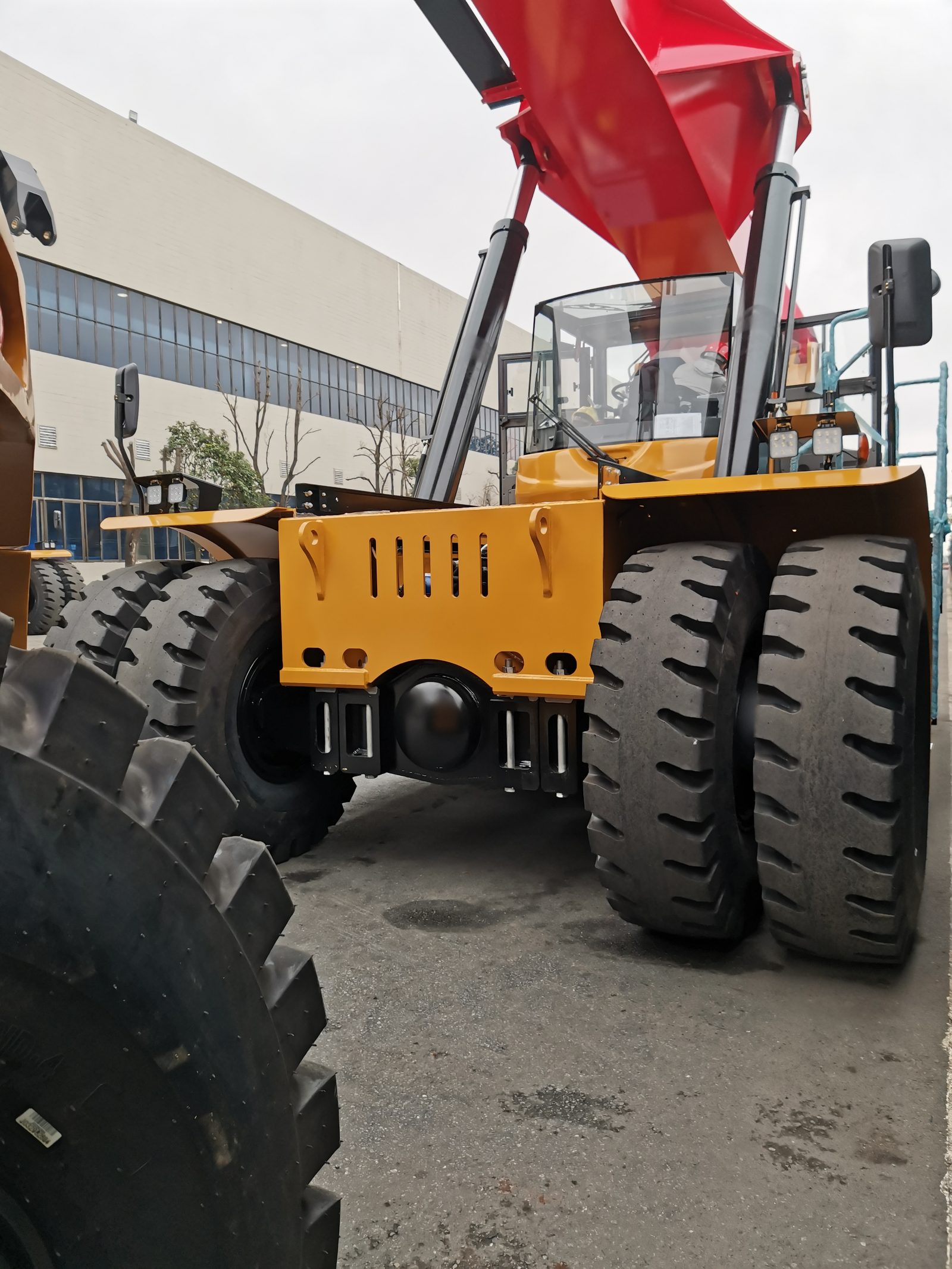
These machines are a steel frame with a lift on one end and a counterweight on the other. The wheels
sit under the frame, the cab is a steel box in the middle, and the receiver usually goes where the
harness ends — which is the cab.
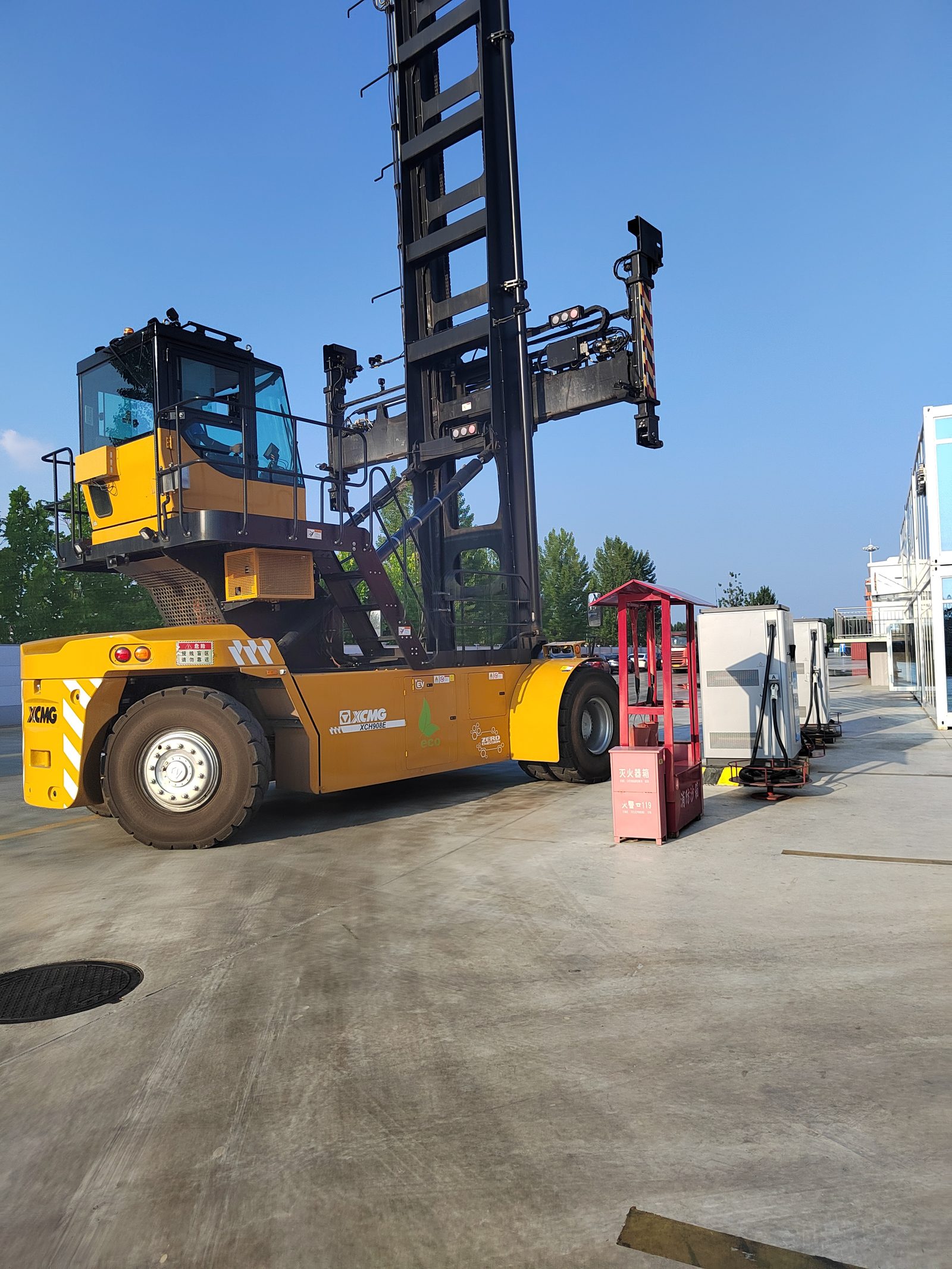
From our controlled test on a reach stacker, that choice has a measured cost:
| Receiver position | Average packet loss |
|---|---|
| Tail (rear of the machine) | 7.03% |
| Inside the cab | 10.80% |
3.77 percentage points, same machine, same day, same sensors. The cab is a steel cage and it is
further from the wheels; the tail is closer to them.
What we install, and where
1. Receiver low on the tail, near the wheels — not in the cab, not behind the panel.
2. Repeater at the front when the chassis is long enough that the front wheels sit at the far end
of the radio path. On our reach stacker test a front repeater took the tail-receiver average from
8.57% to 7.03%.
3. Sensors on all positions, including the inner tyre where a dual pair is used — a single sensor
on the outer tyre only reports half of what the axle is doing.
4. Wheel map written on the machine file, because a handler that changes tyres every season loses
the mapping otherwise.
Straddle carriers: the tyre sets the portal
On a straddle carrier the container passes inside the machine's own frame, so the **tyre height sets
the clearance** the driver relies on when straddling a stack. A soft tyre lowers one corner of the
portal, and the clearance the drawing promised is no longer there. The monitoring case is not "tyre
life", it is geometry.
Why not just check pressures at the start of the shift?
Because the failure that hurts is the one that develops during the shift: a slow leak, a valve problem,
a wheel that took a hit in the stack. A start-of-shift gauge check is a snapshot; the machine works
for eight hours after the snapshot.
What we will not claim
We will not quote a tyre-life improvement percentage from monitoring — that number depends on the
terminal, the loads and the tyres, and we do not have a controlled study for it. What we publish is
the radio measurement (7.03% versus 10.80%) and the install rules that follow from it.
FAQ
Which receiver position do you recommend on a reach stacker? The tail, low and open, close to the
wheels — the cab position measured 3.77 points worse in our test.
Do we need a repeater? If the chassis is long and the front wheels are far from the tail receiver,
a front-mounted repeater helps: 8.57% to 7.03% in our own measurement.
Do straddle carriers need a different sensor? No — same 433.92 MHz sensor and receiver. What
differs is the wheel map and where the receiver can physically sit.
How many positions on a straddle carrier? Eight or sixteen depending on the machine, and both the
outer and inner tyres of a pair need measuring if the axle carries a dual pair.