Aplicaciones / Mobile Crane
Crane TPMS — tyre pressure monitoring for mobile cranes
Crane TPMS for mobile cranes: multi-axle cranes work on uneven ground with heavy outrigger loads, so uneven pressure across an axle group is a stability question, not only a tyre cost question. Wheel count follows the crane's own axle layout — one receiver covers up to 256 wheel positions at 433.92 MHz — and external screw-on sensors (IP68) sit on the valve stem, with data going to the crane's control system over CAN or to a cab display.
Crane TPMS: what a mobile crane actually needs
A mobile crane is not a truck with a different body. The axles carry a working load while the outriggers take the lift, and the crane moves between sites with a long wheelbase and a high centre of gravity. That combination is why crane tyre pressure is a different requirement from truck tyre pressure: a soft tyre on one side of an axle group changes how the load is distributed before it shows up as a handling problem.
How the wheel count is calculated
Wheel count follows the crane's own axle layout. Count the wheels on the axles, not the outriggers — outrigger pads are stabilisers and carry no sensor. A crane with dual tyres on the rear axles has more sensor positions than the axle count alone suggests, which is why the count is taken from the tyre layout rather than from a weight class.
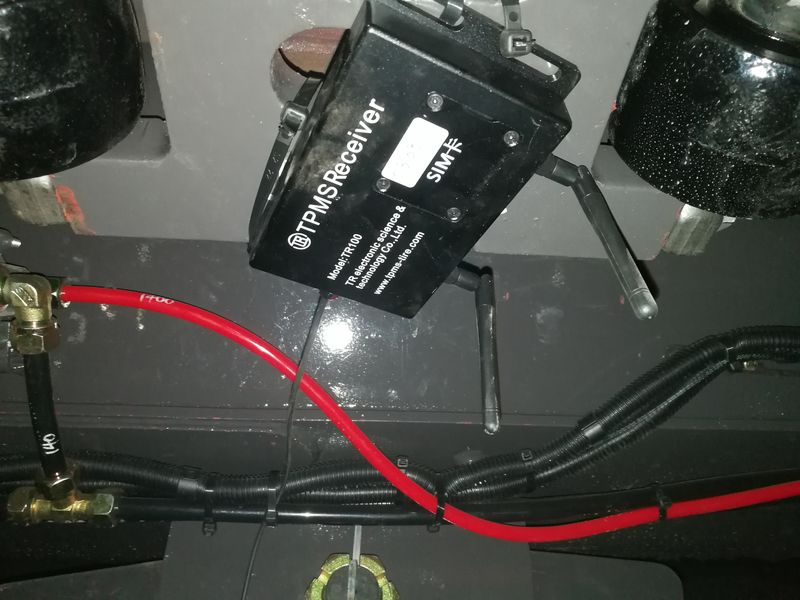
One receiver covers up to 256 wheel positions, so a single mobile crane uses a fraction of the available capacity. In practice a crane installation is one receiver plus one external sensor per wheel, and repeaters only where the chassis geometry blocks the 433.92 MHz path.
Where the sensors and the receiver go
Sensors are external and screw onto the valve stem, sealed to IP68. That matters on a crane because the sensor has to survive site conditions and still be serviceable without removing the wheel. Pressure accuracy is ±7 kPa and tyre temperature accuracy is ±3 °C.
The receiver is the part that decides how the data gets used. Three common arrangements:
- CAN into the crane's control system, so the machine's own logic can act on it;
- a cab display, for the operator;
- or both, when the operator needs to see it and the system needs to log it.
Receiver-to-bus period is 10 ms on CAN 2.0B, so a pressure alarm arrives with the rest of the vehicle data instead of as a separate event.
Why cranes are specified differently from trucks
The value on a crane is not the sensor. It is knowing about a pressure imbalance before the machine is set up and lifting. A crane that arrives on site with a soft tyre loses more than a tyre — it loses the lift slot. That is the argument for instrumentation, and it is why the specification should target stability and availability rather than sensor features.
How a TPMS sensor is tested before it ships
Immersion and water-ingress test on a production sensor: the part is submerged, then checked for leaks and re-tested.
Configuration
| Configuration | 1 receiver + repeaters as required + sensors per wheel count |
| Data path | CAN to the crane's control system, or cab display |
| Sensor | external screw-on, IP68, 433.92 MHz |
| Value | spot pressure imbalance across an axle group before it affects stability |
Delivered on
Multi-axle truck cranes · rough-terrain cranes
| Customer / programme | Application | Scale |
|---|---|---|
| Mobile crane fleets | multi-axle cranes on construction sites | field installation |
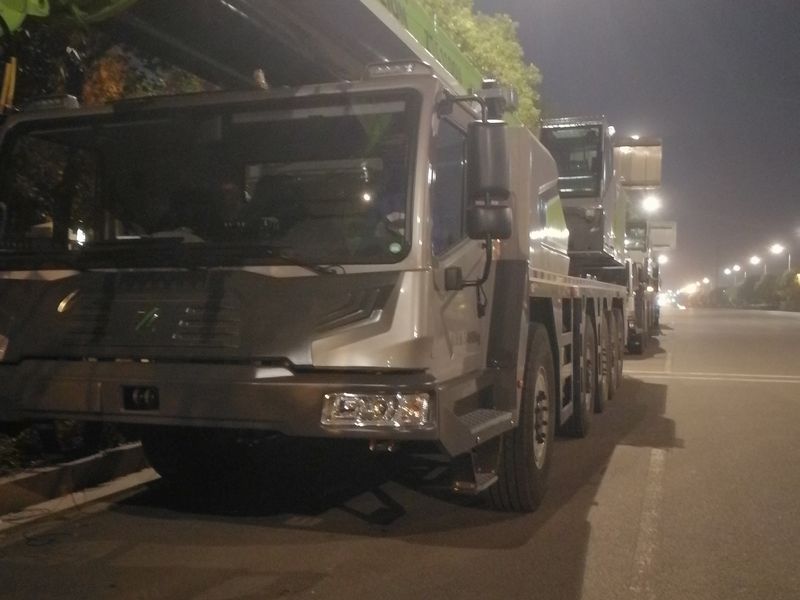
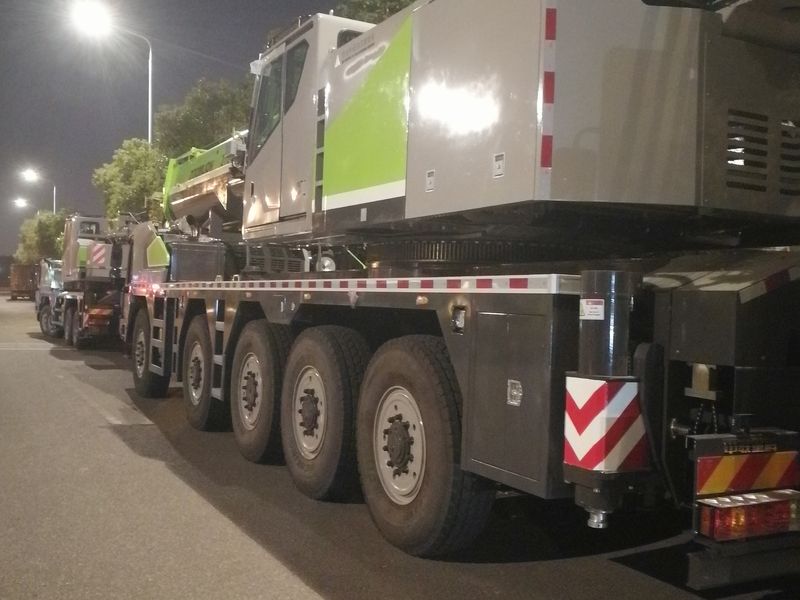
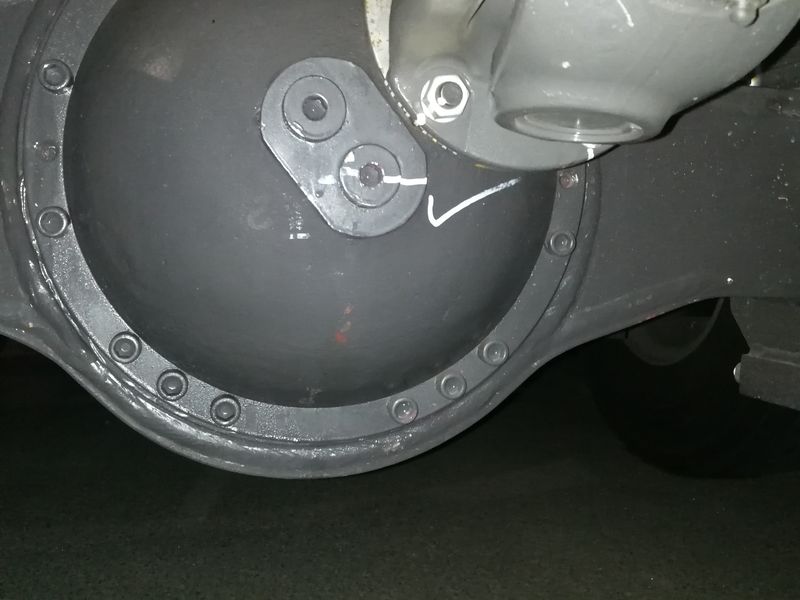
Fotos de campo
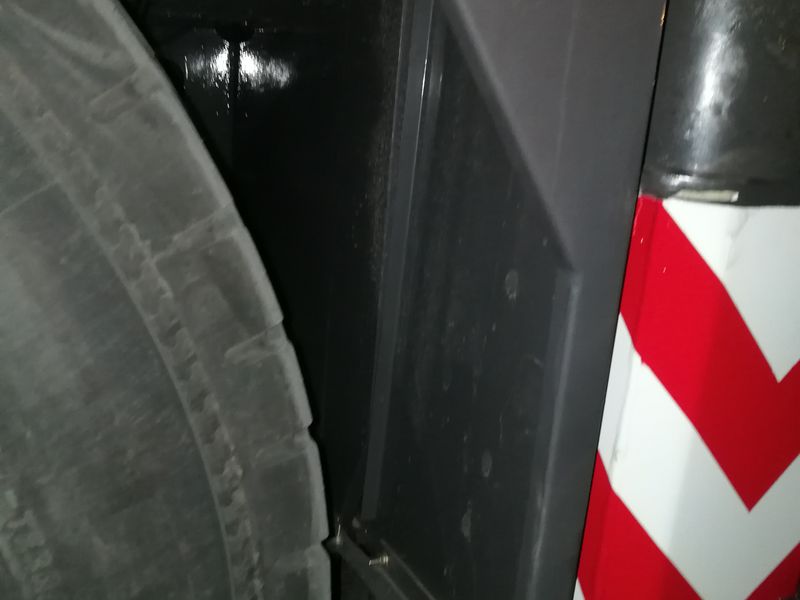
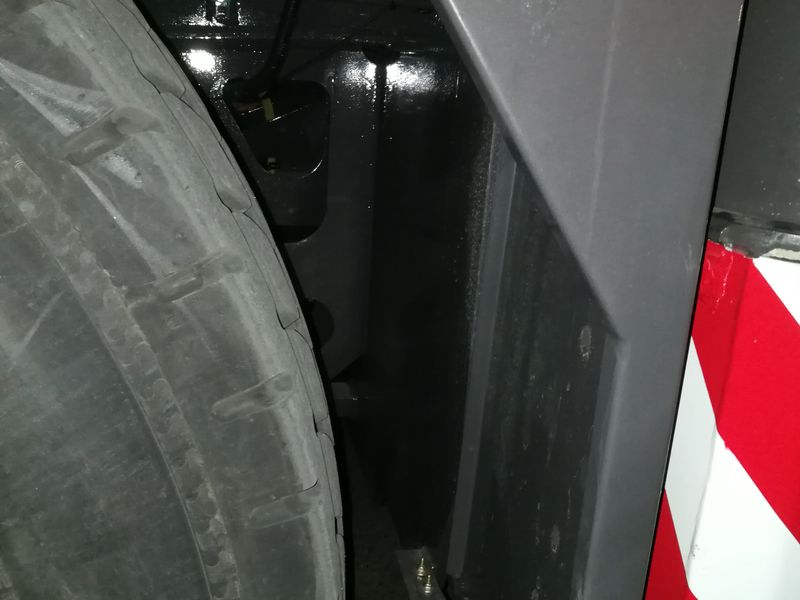
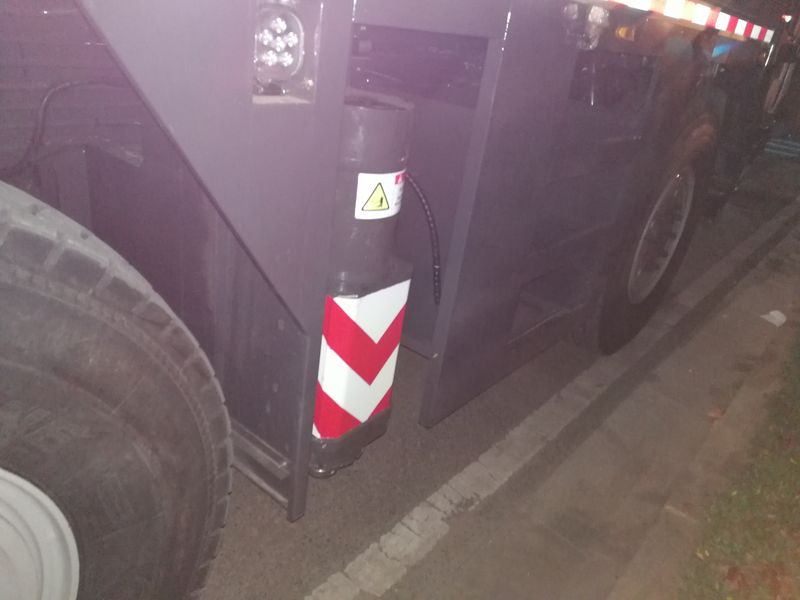
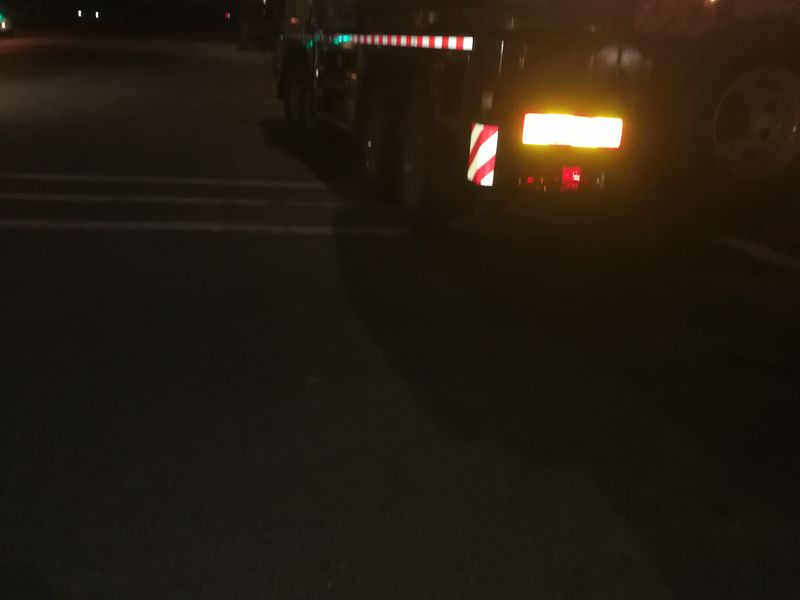
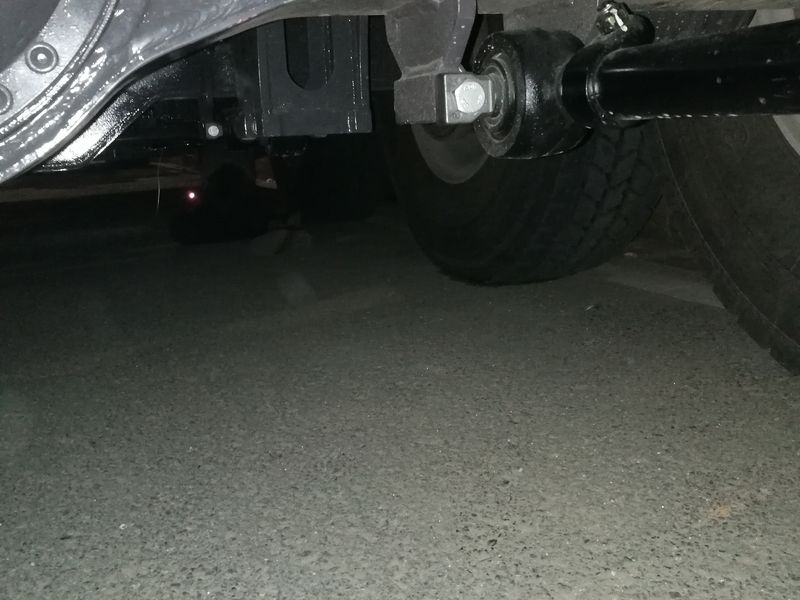
Fotos de instalaciones y operación en esta clase de máquina.
Your machine is probably on this list
Send the model and wheel count. If we have instrumented something similar, we will tell you exactly how it was done.